6–15kW Hybrid Inverter + Storage Bundles for EU Homes and Farms: 6 Ranked Picks
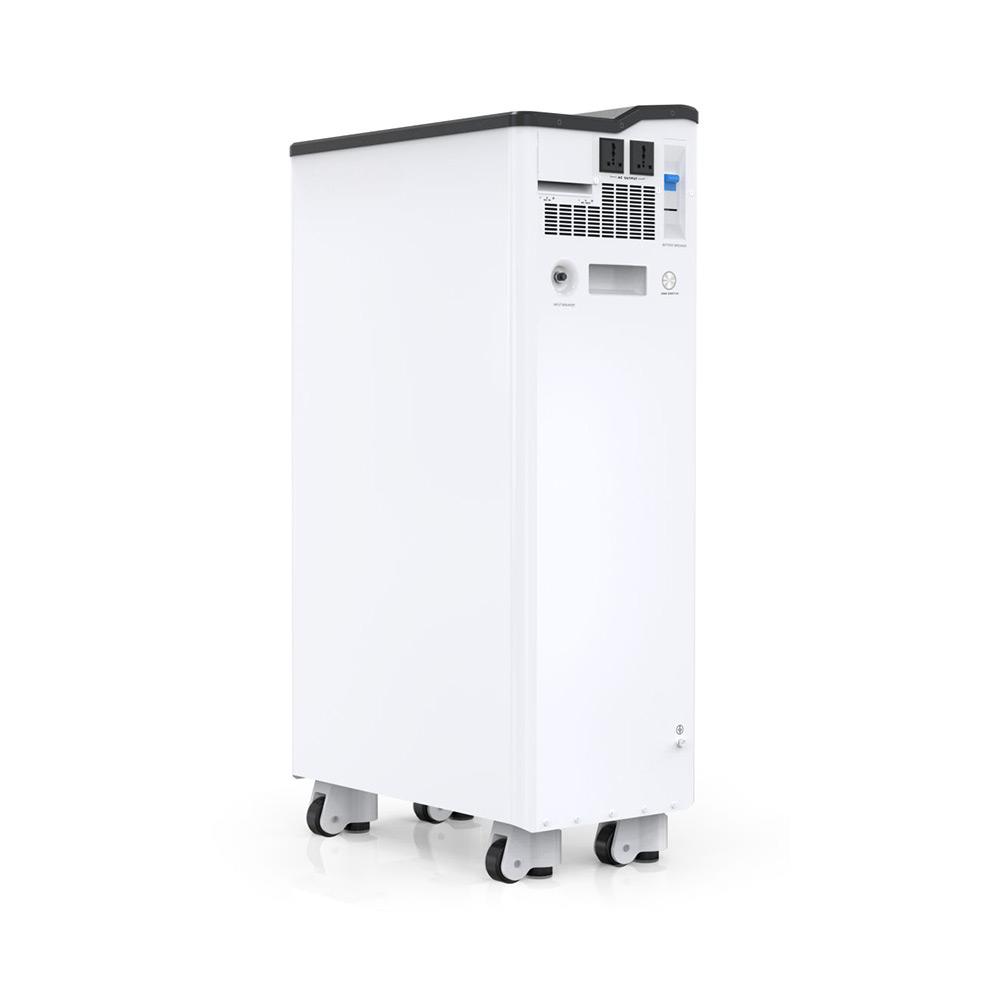
A hybrid inverter and a battery only behave as a system when four capability facts line up with the site: the AC output voltage window, the protection rating, the battery chemistry and physical format, and the charging temperature limit. Miss one and the installation still commissions — it simply underperforms at night, in a cold month, or on the morning an irrigation pump starts. With those four facts as the ranking criteria, this guide orders six configurations assembled from Yeyanghong Energy's 6kW, 10kW, 12kW and 15kW hybrid inverter series and its LiFePO4 storage formats, for EU household and agricultural projects.
Guangdong Yeyanghong Energy Technology Co., Ltd. (Yeyanghong Energy) is a Foshan-based manufacturer of on-grid inverters, off-grid inverters, hybrid inverters, all-in-one energy storage systems, stacked home energy storage, wall-mounted and floor-standing batteries, and PCBA. It exports to the USA, the EU, the Middle East, Southeast Asia, Africa, and Central and South America, with an export share of about 90%. The ranking below is a fit ranking inside that range — each position states why a configuration suits a defined EU load profile and installation environment, and each reason is tied to a product or production fact rather than a marketing claim.
Why hybrid inverter + storage bundles underperform in EU installations
Most bundle failures are specification failures, not equipment failures. They appear in six predictable places:
- Sizing on continuous kW alone. A 6kW or 12kW rating says nothing about motor start-up current on a farm pump, a workshop compressor, or a three-phase cold-room unit.
- Unverified output window. The 6–15kW series delivers an AC output voltage range of 180V~270V. That window has to be checked against the actual site voltage, particularly at the end of a rural low-voltage line.
- Storage chosen on kWh only. Wall-mounted and floor-standing formats of 5kWh, 10kWh and 16kWh occupy different space, carry different weight distribution, and need different cable routes. All-in-one units remove the separate DC run entirely.
- Protection rating treated as a detail. The range covers IP21, IP55, IP65, IP66 and IP67. An indoor plant room and an exposed agricultural shed do not accept the same rating.
- Charging temperature ignored. The charging temperature range is 0°C~55°C. An unheated barn in a cold EU winter sits outside that window, so placement or heating becomes a design decision, not an afterthought.
- OEM capability assumed. Buyers who plan to relabel or reconfigure a unit often discover too late that communication, IP rating or power changes were never available on that platform.
A capability check therefore reads as a list of verifiable yes/no facts. The rest of this article supplies them for one manufacturer's range, then converts them into six ranked bundles and a purchasing sequence.
Industry background: three-phase load growth and a standards layer buyers cannot skip
Grand View Research values the global solar hybrid inverter market at USD 10.7 billion in 2024, and reports that three-phase hybrid inverters held a 61.3% revenue share that year. That split is consistent with what EU project pipelines now contain: larger residential systems, farm buildings with three-phase pumps and refrigeration, and light industrial loads — not only single-phase rooftop retrofits.
The compliance layer is equally concrete. IEC 62109-2:2011 sets out particular safety requirements for d.c.-to-a.c. inverter products and products that perform inverter functions in photovoltaic power systems. IEC TS 62257-301:2025 addresses the design and implementation of hybrid off-grid solar systems, with or without an energy storage system. IEC TS 62257-9-7:2019 covered selection and sizing of inverters for off-grid applications but has since been listed as replaced, so its status should be confirmed against the official IEC record before it is quoted in a tender. On the trade side, hybrid inverters with MPPT functionality fall under HS 8504.40.84, which matters for duty and import planning.
The Yeyanghong Energy 6–15kW hybrid inverter + storage platform
Four inverter outputs anchor the range — 6kW, 10kW, 12kW and 15kW — with EU-market design and a shared set of electrical and mechanical characteristics that make bundles comparable across sizes.
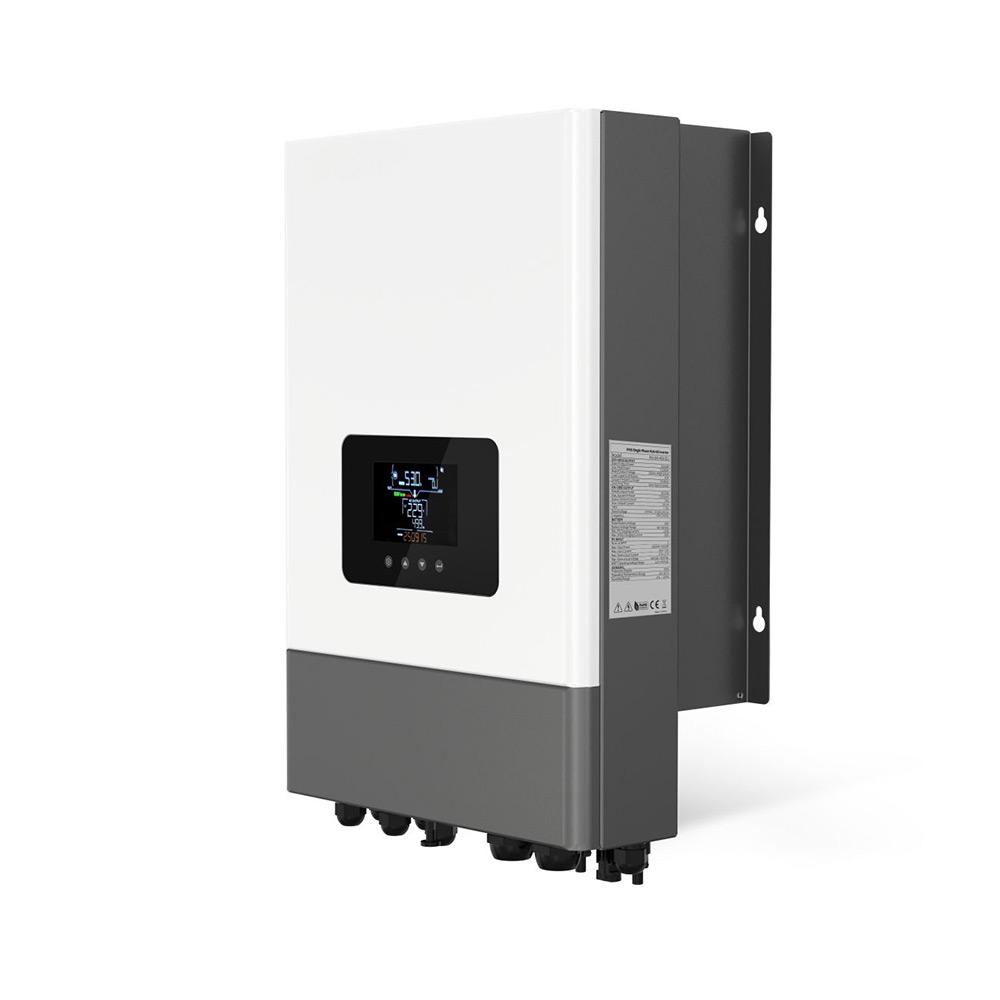
- Output voltage: AC output range 180V~270V, covering EU 230V nominal supply with headroom for voltage variation on rural lines.
- Input voltage options: 12V, 24V and 48V, so one platform serves compact DC-coupled setups and larger 48V storage banks.
- Charging temperature: 0°C~55°C, which defines where the unit can be installed without external heating.
- Protection ratings available: IP21, IP55, IP65, IP66 and IP67 — the rating must be fixed per installation location, not per product family.
- Construction: aluminium alloy housing; LiFePO4 battery chemistry across the storage options.
- Storage formats: all-in-one MF-6.2K+10KWh configurations at 6kW/10kWh, 6kW/12kWh and 12kW/16kWh; wall-mounted and floor-standing batteries at 5kWh, 10kWh and 16kWh; stacked home energy storage for capacity growth.
- Durability basis: 5-year warranty, with cycle life stated as 6000 or 8000 cycles at 90% depth of discharge, 25°C and 0.5C–1C, depending on model.
Two of those facts deserve emphasis because they are routinely misused in tenders. The cycle-life figure is a test basis, not a guarantee of throughput: 90% DOD, 25°C and 0.5C–1C are the conditions behind the number, and a battery cycled harder or hotter will not reach it. The 0°C~55°C charging window is similar — it defines placement, so an outdoor-rated enclosure with IP66 or IP67 protection and a cold-weather location strategy is a design requirement, not a premium option.
Behind the product range, the production facts that matter at the execution stage are: monthly capacity of 100,000 sets, 100% testing of every unit, a 400-strong workforce with 15 R&D engineers, OEM/ODM/SKD production, and customization across WIFI, Battery, 4G/5G, IP Rating and Power. Minimum order quantity is 2 pieces and typical production lead time is 30 to 45 days.
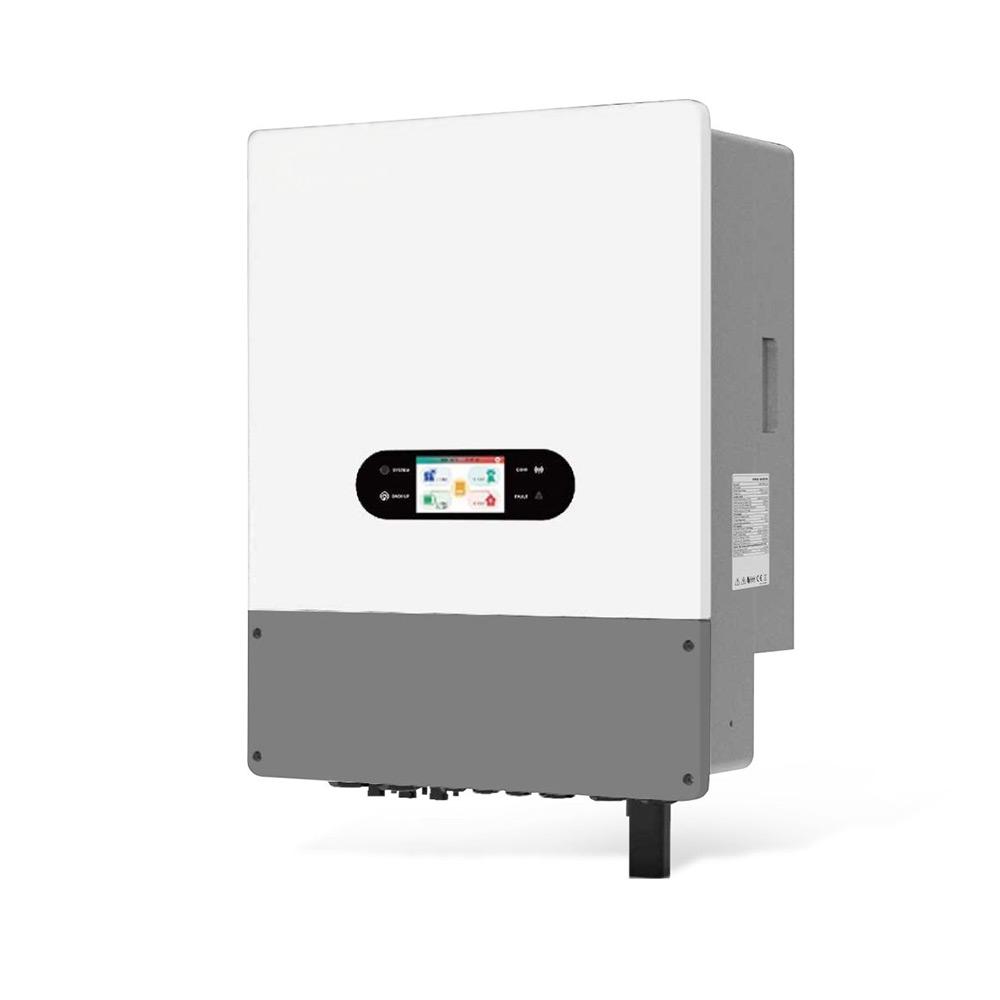
Six ranked hybrid inverter + storage bundles, 6kW to 15kW
Rank 1 — 6kW single-phase + MF-6.2K+10KWh all-in-one (6kW / 10kWh)
The default choice for a single-phase EU family home. Inverter and 10kWh LiFePO4 storage share one enclosure, which removes a separate DC cable run, a second wall position and a second set of protection devices. The 180V~270V output window covers 230V nominal supply, and the 5-year warranty applies to the pair rather than to two separately sourced items. Choose an IP rating that matches the room, and confirm the charging temperature window before placing the unit in an unheated garage.
Rank 2 — 6kW single-phase + 12kWh all-in-one (6kW / 12kWh)
Same inverter platform, 2kWh more storage. That difference is what usually decides whether a heat pump or an overnight EV charge can be shifted into the stored energy window without changing the inverter. Because the electrical architecture is unchanged, protection rating, output window and charging temperature behave exactly as in rank 1 — the only new variable is physical space for the larger enclosure.
Rank 3 — 12kW three-phase + 16kWh all-in-one (12kW / 16kWh)
The point where the range crosses from residential into small agricultural and light commercial territory. Three-phase output handles farm office loads, dairy equipment and larger motor-driven systems, while 16kWh of LiFePO4 provides a meaningful night buffer. Keeping the configuration all-in-one preserves short DC cabling in buildings where cable routes are constrained.
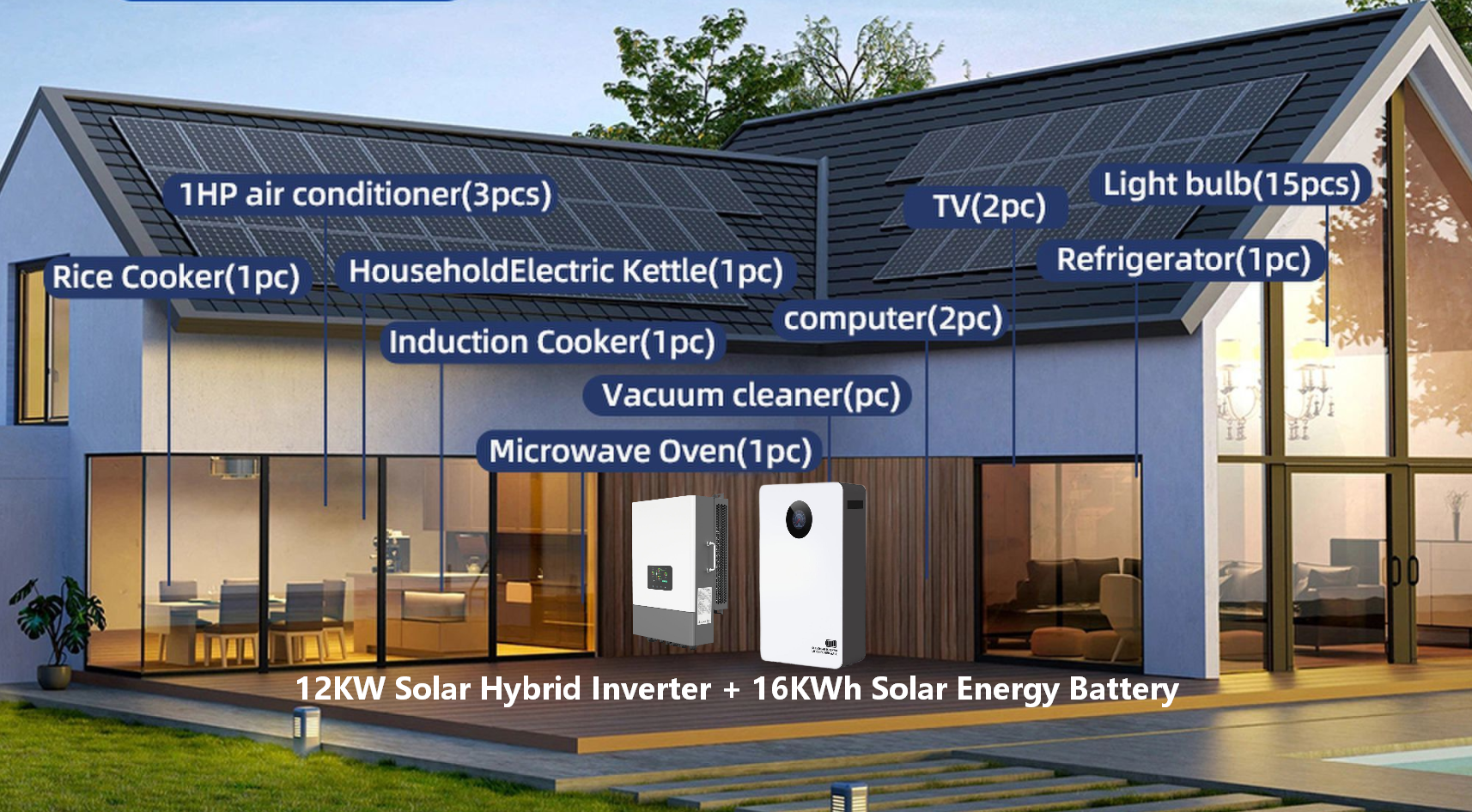
Rank 4 — 10kW three-phase + wall-mounted 10kWh
A split configuration that wins on room layout rather than on capacity. A wall-mounted 10kWh battery keeps the floor clear in a plant room, while the 10kW three-phase inverter can sit on a different wall or in a different room entirely — useful where the battery should stay in a tempered space and the inverter does not need to. IP rating selection is made per device, which is one of the practical advantages of splitting the bundle.
Rank 5 — 12kW three-phase + floor-standing 16kWh
Floor-standing 16kWh storage carries weight low and is easier to service in farm utility rooms and equipment sheds. Paired with the 12kW three-phase inverter, it covers irrigation cycles plus evening building load. Where the installation sits adjacent to an exposed area, the IP65, IP66 or IP67 options become the deciding factor, and the 0°C~55°C charging window again determines whether the room needs frost protection.
Rank 6 — 15kW three-phase + floor-standing 16kWh
The top of the series. The 15kW three-phase inverter is the correct starting point for construction site power, larger farms with simultaneous pump and cold-storage load, and light industrial applications where start-up current is the constraint rather than average consumption. Paired with floor-standing 16kWh storage — and expandable through the stacked home energy storage format where more capacity is planned — it is the configuration that gives the most headroom before a second inverter is needed.
Step-by-step breakdown: from load profile to purchase order
The sequence below is the order in which the six bundles should be evaluated. It is also the order in which a supplier can answer without guessing.
- Step 1 — Fix the phase and the load profile. Single-phase or three-phase, continuous load, and the largest start-up current on site. This alone narrows the range to 6kW, 10kW, 12kW or 15kW.
- Step 2 — Check the output window against the site. Confirm that 180V~270V output suits the measured supply, especially on rural feeders and at the end of long service drops.
- Step 3 — Size storage in kWh and in format. All-in-one (6kW/10kWh, 6kW/12kWh, 12kW/16kWh) versus wall-mounted or floor-standing 5kWh, 10kWh, 16kWh. Format decisions are space and cable decisions as much as energy decisions.
- Step 4 — Match the IP rating to the location. Select from IP21, IP55, IP65, IP66 or IP67 based on where the equipment physically sits, not on the highest available number.
- Step 5 — Verify the battery basis. Confirm LiFePO4 chemistry, the 5-year warranty terms, and whether the quoted model is rated at 6000 or 8000 cycles at 90% DOD, 25°C and 0.5C–1C.
- Step 6 — Lock the commercial and customization terms. MOQ 2 pieces, EXW / FOB / CIF / LC delivery terms, 30/70 payment terms, pre-shipment test as the acceptance criterion, and a 30–45 day production lead time. Any OEM change to WIFI, Battery, 4G/5G, IP Rating or Power must be agreed before the order is released, because those changes touch enclosure and thermal design.
Use cases: which ranked bundle fits which environment
- Household. Ranks 1 and 2. Single-phase self-consumption with evening and backup coverage; IP rating selected for garage, utility room or outdoor wall.
- Agriculture. Ranks 3 and 5. Three-phase pump starting, milking and cold-room loads; floor-standing 16kWh kept low and accessible in a utility room.
- Construction. Rank 6. Site offices, tools and temporary distribution where the largest start-up current on site sets the inverter size.
- Military and remote sites. Ranks 3 to 6. Off-grid architectures where hybrid system design guidance such as IEC TS 62257-301:2025 is relevant, and where the 0°C~55°C charging window and IP66/IP67 options determine feasibility.
- New energy transportation. Ranks 4 to 6. Depot and charging-support loads that need three-phase output plus a storage buffer rather than a residential-size battery.
- Industrial. Rank 6, with stacked storage where capacity growth is already planned. Light industrial loads are the practical ceiling of a 15kW platform before multiple units are considered.

Comparison table: the six bundles at a glance
| Rank | Bundle | Inverter | Storage | Best-fit EU application | Capability reason for inclusion |
|---|---|---|---|---|---|
| 1 | 6kW + 10kWh all-in-one | 6kW single-phase hybrid, 180V~270V output | MF-6.2K+10KWh, LiFePO4 | Single-family home, grid-tied with backup | One enclosure, no separate DC run; 5-year warranty |
| 2 | 6kW + 12kWh all-in-one | 6kW single-phase hybrid | All-in-one 6kW/12kWh | Home with heat pump or overnight EV charging | Adds 2kWh without changing the inverter platform |
| 3 | 12kW + 16kWh all-in-one | 12kW three-phase hybrid | All-in-one 12kW/16kWh | Large home, small farm | Three-phase output with 16kWh night buffer |
| 4 | 10kW + 10kWh wall-mounted | 10kW three-phase hybrid | Wall-mounted 10kWh | Farm office, dairy, light commercial | Wall format preserves floor area; separate placement possible |
| 5 | 12kW + 16kWh floor-standing | 12kW three-phase hybrid | Floor-standing 16kWh | Farm utility room, irrigation | Weight carried low; IP65/IP66/IP67 options for exposed locations |
| 6 | 15kW + 16kWh floor-standing | 15kW three-phase hybrid | Floor-standing 16kWh, expandable via stacked storage | Construction site, larger farm, light industrial | Largest output in the series; headroom for motor start-up |
Across all six rows the shared technical basis is the same: 12V / 24V / 48V input options, 180V~270V AC output, 0°C~55°C charging temperature, aluminium alloy construction, LiFePO4 chemistry, and a 5-year warranty with 6000 or 8000 cycles at 90% DOD, 25°C and 0.5C–1C depending on model. The differentiator is format and rating fit, which is exactly where projects fail.
Frequently asked questions
Which standards and documents should an EU buyer check on a hybrid inverter + storage bundle?
Start with standard scope, then ask for the certificate package for the destination market. IEC 62109-2:2011 sets out particular safety requirements for d.c.-to-a.c. inverter products and products that perform inverter functions in photovoltaic power systems. IEC TS 62257-301:2025 addresses the design and implementation of hybrid off-grid solar systems, with or without an energy storage system. IEC TS 62257-9-7:2019 covered off-grid inverter selection and sizing but has been listed as replaced, so its current status should be confirmed against the official IEC record before it is cited in a tender. For import and duty planning, hybrid inverters with MPPT functionality are classified under HS 8504.40.84. A standard scope is not a certificate: request the model datasheet, the IP rating and the battery test conditions together with the market-specific certificate package.
Can the 6–15kW hybrid inverter series be customized for OEM/ODM projects?
Yes. Yeyanghong Energy provides OEM, ODM and SKD production services, with customization options covering WIFI, Battery, 4G/5G, IP Rating and Power. The engineering resource behind this is a 15-engineer R&D team, and every unit is 100% tested before shipment, with monthly capacity of 100,000 sets. Because IP rating and power changes affect enclosure and thermal design, customization must be fixed before an order is released rather than after.
What purchasing terms apply to a bundle order?
Minimum order quantity is 2 pieces. Delivery terms available are EXW, FOB, CIF and LC, payment terms are 30/70, and the acceptance criterion is a pre-shipment test. The commercial basis of a quote depends on the configuration: inverter output (6kW, 10kW, 12kW or 15kW), storage capacity and format (all-in-one 6kW/10kWh, 6kW/12kWh, 12kW/16kWh, or wall-mounted and floor-standing 5kWh, 10kWh, 16kWh), IP rating, and any OEM customization.
Can a buyer validate a sample before committing to a project-sized order?
Yes. With a minimum order quantity of 2 pieces, a sample-scale order sits within normal production rather than outside it, and each unit is 100% tested before shipment. A practical sample protocol checks the items that cause field problems: charge and discharge behaviour at the stated 0.5C–1C and 90% DOD basis, the 0°C~55°C charging window in the intended installation room, and whether the delivered IP rating matches the location. Typical production lead time of 30 to 45 days applies to sample orders as well.
What is the production lead time, and what support follows delivery?
Typical production lead time is 30 to 45 days, against a monthly production capacity of 100,000 sets. After-sales support covers replacement of accessories, extended warranty and remote installation services. For EU projects the practical next step is to convert the chosen rank into a configuration sheet — inverter output, storage capacity and format, IP rating, communication option — and request a current lead-time confirmation and the product catalogue from Yeyanghong Energy before the installation calendar is fixed.
Conclusion: rank by fit, then execute on facts
The six configurations in this guide are not separated by marketing language; they are separated by output window, storage format, protection rating and charging temperature — the four facts that decide whether a bundle performs on a November night in an unheated shed or during a pump start on a summer morning. Ranks 1 and 2 cover single-phase homes with 10kWh and 12kWh all-in-one storage; rank 3 crosses into three-phase with 12kW/16kWh; ranks 4 to 6 pair 10kW, 12kW and 15kW three-phase inverters with wall-mounted and floor-standing storage for farms, construction sites and light industrial loads.
Because the whole range shares 12V/24V/48V input options, 180V~270V output, 0°C~55°C charging, aluminium alloy construction, LiFePO4 storage and a 5-year warranty, the buying decision reduces to two questions: which rank matches the site, and can the supplier execute — 100% testing, OEM/ODM/SKD customization, MOQ 2 pieces and a 30–45 day lead time. Both questions are answerable before a purchase order is raised.
Next step: request the configuration sheet and current lead time
Download the Yeyanghong Energy product catalogue for the full 6–15kW hybrid inverter and LiFePO4 storage specification, then send your load profile for a configuration recommendation.
Catalogue: Yeyanghong Energy product brochure (PDF)
Website: www.yeyanghong.com | Email: admin@yeyanghong.com | Tel / WhatsApp: +86-18042878526 (Kevin Xia)
Samples from 2 pieces, OEM/ODM/SKD available, typical production lead time 30–45 days.
Have Questions or Need More Details?
Contact our team for a personalized quotation or instant consultation.
Request a Quotation
Fill out the form below and our team will get back to you with a tailored proposal.
WhatsApp Direct Chat
Prefer to chat in real-time? Message us on WhatsApp for instant assistance & quick answers.
- Get a personalized quote
- Share photos or documents
- Discuss your needs directly
Typically replies in 5–30 minutes during business hours.