
Hybrid Inverter + 10KWh Battery vs MF-6.2K+10KWh All-in-One: EU Home Storage Decision
A 10 kWh home storage decision in the EU usually starts as a hardware architecture question rather than a brand question: should the inverter and the battery be bought as two separate products, or as one pre-integrated cabinet? Both routes exist inside the EU-standard line of Guangdong Yeyanghong Energy Technology Co., Ltd., trading as Yeyanghong Energy — a Foshan-based manufacturer of on-grid inverters, off-grid inverters, on & off grid inverters, micro inverters, all-in-one energy storage systems, BESS, stacked home energy storage systems, wall mounted & floor standing batteries, and PCBA.
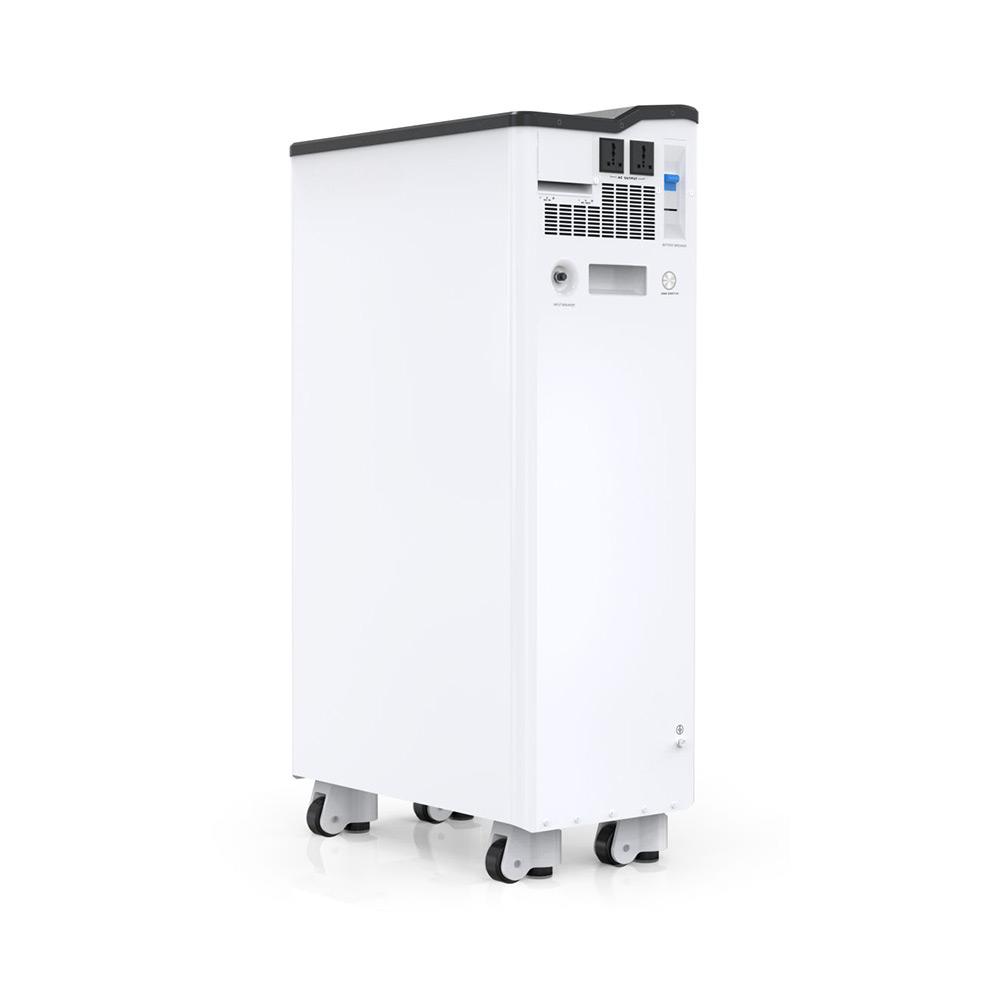
Battery Energy Storage System MF-6.2K+10KWh — the integrated option in this comparison.
This article is written for installers, distributors and procurement teams who are already past brand discovery and are now specifying hardware. It compares exactly two configurations using published EU-standard product data: a Hybrid Inverter rated 6KW / 10KW / 12KW / 15KW paired with a Wall Mounted & Floor Standing Battery Energy Storage rated 5KWh / 10KWh / 16KWh, against the Battery Energy Storage System MF-6.2K+10KWh.
Direct answer for EU installers:
- Split architecture — Hybrid Inverter + 10KWh battery: choose it when power and capacity must scale independently, when the inverter and the battery should remain separate service items, or when you want access to the 16KWh battery rated 8000 cycles at 90% DOD instead of the 6000-cycle 5KWh and 10KWh units.
- Integrated architecture — BESS MF-6.2K+10KWh: choose it when a single enclosure, a listed 180V~270V output voltage range, a 0~55°C charging temperature window, LiFePO4 chemistry and a 5-year warranty on one assembly matter more than modularity.
Both options share aluminium alloy construction, LiFePO4 battery chemistry, IP21 / IP55 / IP65 / IP66 / IP67 protection options, and a 5-year warranty period.
Problem Definition: Where the Two 10 kWh Architectures Collide
The difficulty is that the two architectures overlap in the same capacity class. A 10KWh wall mounted battery sitting next to a hybrid inverter, and a MF-6.2K+10KWh all-in-one cabinet, occupy the same nominal energy class, the same EU 220V~230V output expectation, and the same LiFePO4 cell chemistry. On a datasheet summary alone, they can look interchangeable. They are not.
The decision problem has to be broken into constraints before it can be answered:
- Grid compliance. PV inverters sold into Europe must support CE marking, which for this product category is built on IEC 62109-1 (general safety) and IEC 62109-2 (specific inverter safety). An architecture that is compliant on paper still has to match the local grid connection rules of the destination country.
- Output and frequency. The hybrid inverter and the on & off grid inverter platforms publish an EU-standard output voltage of 220V~230V and a rated grid frequency of 50Hz / 60Hz. The all-in-one BESS publishes a listed output voltage range of 180V~270V. These are different specification languages and must be read against the project, not against each other.
- Ingress protection. IP21, IP55, IP65, IP66 and IP67 options exist across the storage line, but the correct rating depends on where the unit is installed — a ventilated indoor plant room, an unheated garage, or a semi-exposed outdoor wall.
- Cycle life at realistic depth of discharge. The 5KWh and 10KWh batteries are rated 6000 cycles at 90% DOD / 25°C / 0.5C~1C. The 16KWh unit is rated 8000 cycles under the same conditions. Cycle life, not nominal kWh, is what usually separates two quotes that look similar.
- Footprint and mounting. A wall mounted or floor standing battery plus a separate wall inverter consumes two mounting positions and two cable runs. An all-in-one consumes one.
- Commercial terms. Minimum order quantity, lead time, customization scope and warranty handling all sit on top of the technical decision.
In short, the problem is not "which product is better" but "which constraint set the project actually has."
Industry Background: What EU Buyers Are Choosing Between
Hybrid inverter demand is not a niche. Grand View Research estimated the global solar hybrid inverter market at USD 10.7 billion in 2024, and Precedence Research reported that on-grid hybrid inverters held the largest share within the hybrid segment, at 59% of revenue in 2024. Market sizing for this category varies widely depending on whether the scope counts only the inverter or the full storage system — published figures range from USD 2.88 billion to USD 10.7 billion for the same year, which is a scope difference rather than a disagreement about growth.
Supply concentration is high. Wood Mackenzie reported that Huawei and Sungrow together accounted for 55% of global solar inverter shipments in 2024, while S&P Global Commodity Insights ranked Growatt as the No. 1 global residential PV inverter supplier and a Top 3 hybrid inverter supplier in the same year. Behind that top tier sits a broad manufacturing base: China alone accounted for over 330 GW of inverter shipments in 2024, according to Wood Mackenzie.
For an EU buyer, the practical consequence is that the inverter brand tier is well known, while the architecture decision — split versus integrated — is usually left to the installer. That is the gap this guide addresses. Compliance context is also stable and public: hybrid inverters for PV systems are required to comply with IEC 62109-1 and IEC 62109-2 for CE marking in Europe, as defined by the International Electrotechnical Commission.
Detailed Solution: The Two EU-Standard Architectures, Specification by Specification
Architecture A — Hybrid Inverter 6KW / 10KW / 12KW / 15KW plus 5KWh / 10KWh / 16KWh battery
The hybrid inverter platform publishes an input power range of 6KW / 10KW / 12KW / 15KW, an input voltage of 12V / 24V / 48V, an EU-standard output voltage of 220V~230V (with a US-standard 110V~120V variant on the same platform), a rated grid frequency of 50Hz / 60Hz, and a protection degree selectable across IP21, IP55, IP65, IP66 and IP67. The enclosure is aluminium alloy.
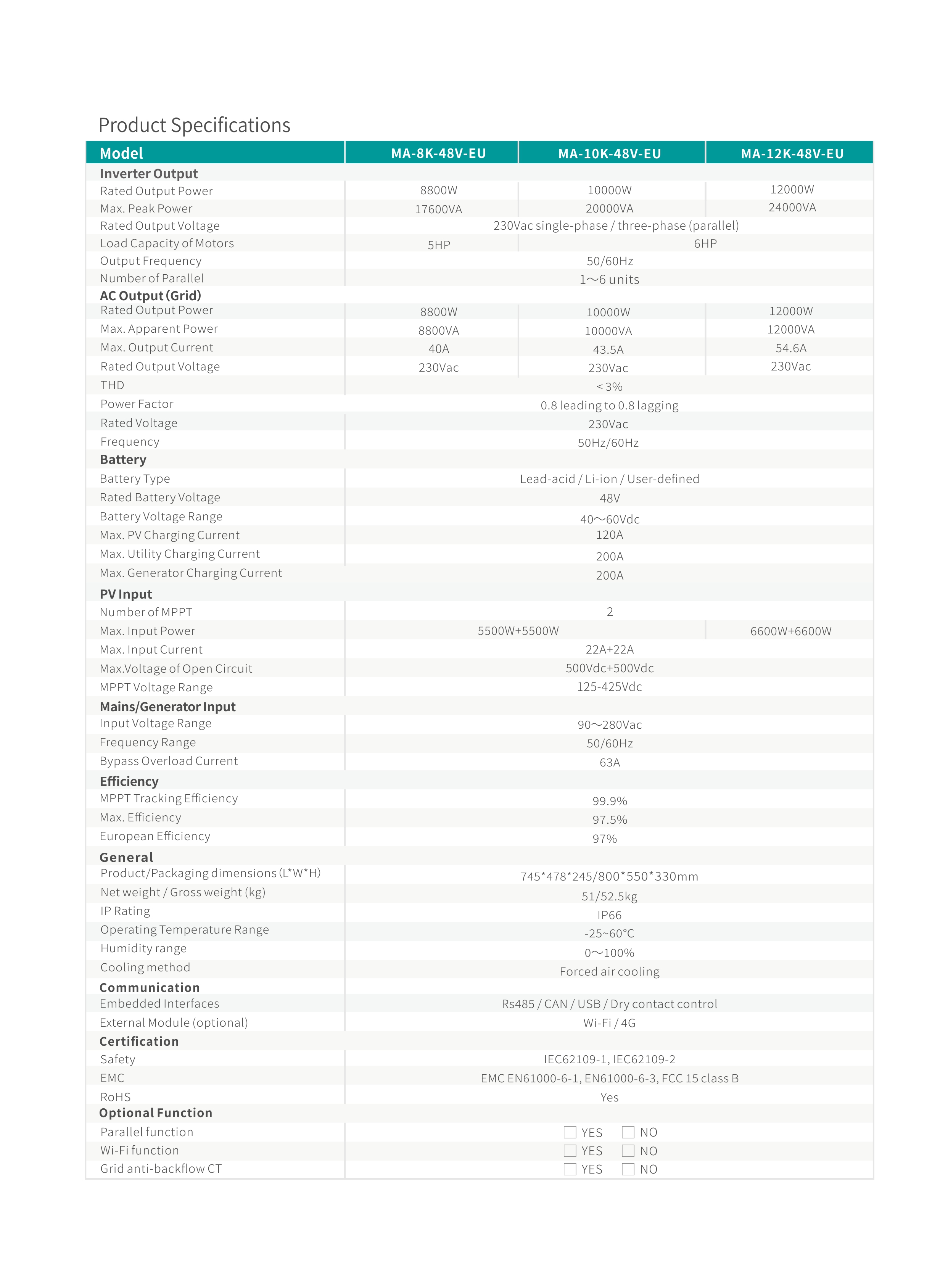
Published specification sheet for the EU-Standard 230V hybrid inverter range (6KW / 10KW / 12KW / 15KW).
The battery side of this architecture is the Wall Mounted & Floor Standing Battery Energy Storage, available in 5KWh, 10KWh and 16KWh. It uses LiFePO4 battery technology and aluminium alloy construction. Its published cycle life is 6000 cycles at 90% DOD / 25°C / 0.5C~1C for the 5KWh and 10KWh models, and 8000 cycles at 90% DOD / 25°C / 0.5C~1C for the 16KWh model. Protection is selectable across IP21, IP55, IP65, IP66 and IP67, and the warranty period is 5 years.
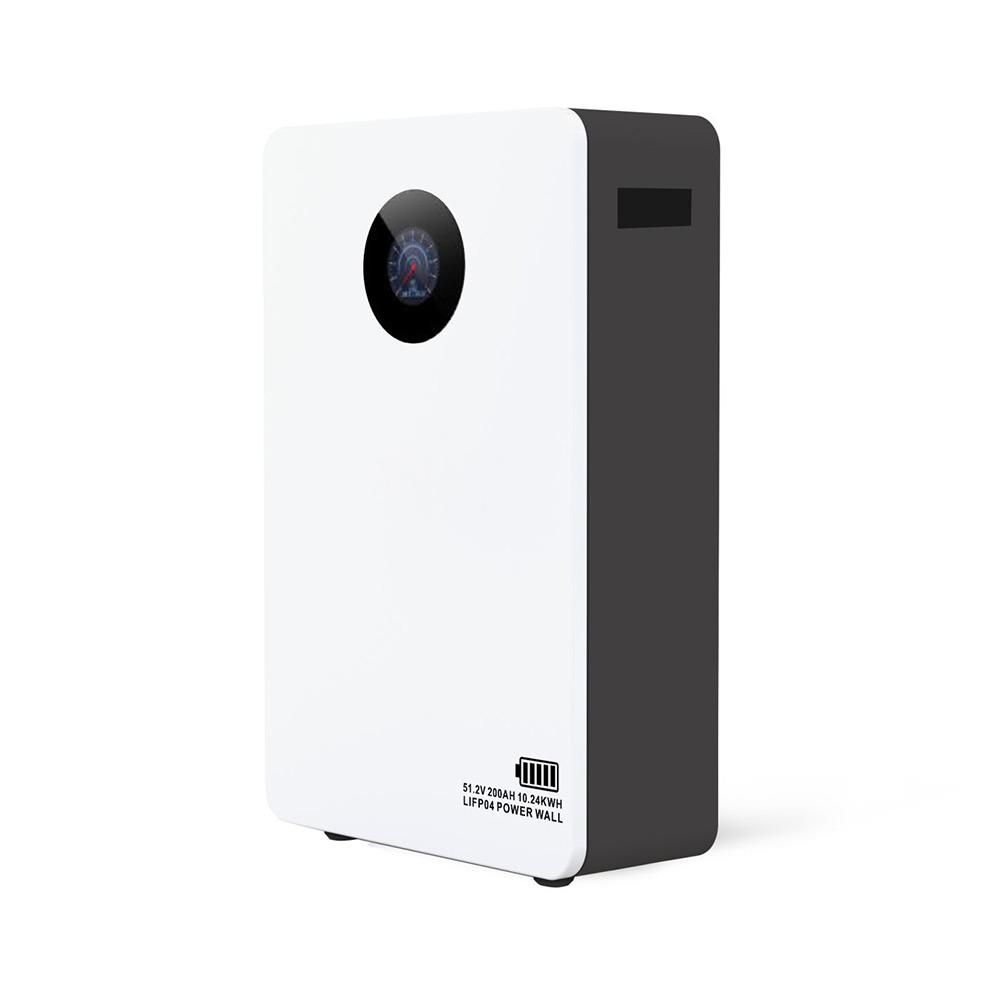
Wall Mounted & Floor Standing Battery Energy Storage 10KWh — the capacity used in both configurations compared here.
When this pair is deployed as a system, the operating logic is automatic: the system switches between solar charging, battery discharge and grid complementary supply, and runs as a 24-hour automatic intelligent operation. The published system-level protection requirements include overcharge, over-discharge and short-circuit protection, plus wide input voltage adaptability and compliance with local grid safety certification. A typical matched configuration in the EU product data is a 12KW inverter with a 16KWh battery energy storage system.
Architecture B — Battery Energy Storage System MF-6.2K+10KWh (all-in-one)
The MF-6.2K+10KWh packages the conversion stage and the storage stage into one enclosure. Its published parameters are LiFePO4 battery chemistry, an output voltage range of 180V~270V, a protection rating selectable across IP21, IP55, IP65, IP66 and IP67, a charging temperature range of 0~55°C, and aluminium alloy construction.

Specification sheet for the all-in-one Battery Energy Storage System MF-6.2K+10KWh.
The all-in-one family extends beyond the 10KWh unit. The same platform covers the MF-4.2K+8KWh, MF-12K+16KWh and MF-15K+32KWh, and the stacked home energy storage line adds MF-5K+10KWh and MF-5K+15KWh with a listed output voltage range of 120V~450V / 90V~280V. That matters for a distributor: the same installation logic and the same compliance language carry from a 6.2K+10KWh single-phase home job up to a larger stacked residential or light-commercial project.
What both architectures share
Both are built on LiFePO4 battery chemistry and aluminium alloy construction. Both offer the same five ingress protection levels. Both carry a 5-year warranty period. Both are listed for the same application industries: photovoltaic new energy, power grid, wind power, telecommunication and IDC data centers, industrial manufacturing, new energy transportation, military and remote off-grid scenarios, household and outdoor consumer use, construction, real estate, hospitals and schools, and agriculture, animal husbandry and fishery. The difference between them is not chemistry or durability — it is architecture, scaling logic and service model.
Step-by-Step Breakdown: A 7-Step Selection Process for Installers
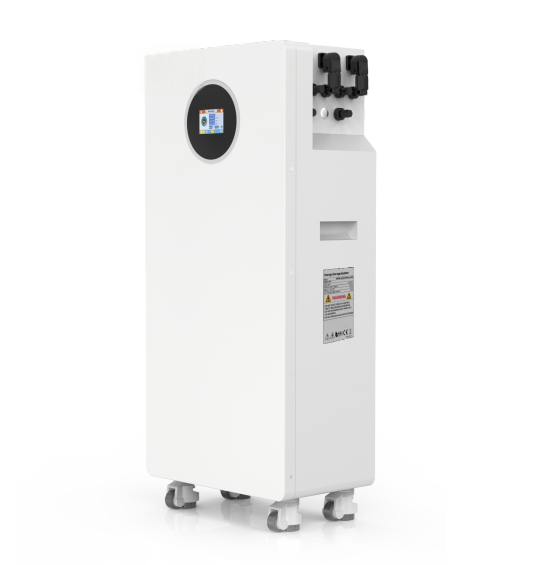
The 16KWh wall mounted / floor standing battery is rated 8000 cycles at 90% DOD — the highest cycle rating in this comparison.
Use Cases: Where Each Architecture Fits
Household and outdoor consumer. A villa roof solar PV system on a 12KW inverter with a 16KWh battery is a documented matched configuration. Where the driver is a high electricity bill, the split architecture allows the installer to start at 6KW with a 5KWh battery and add capacity later without replacing the inverter.
Construction, real estate, hospitals and schools. These sites usually need defined backup circuits and predictable service access. The all-in-one MF-6.2K+10KWh suits locations where a single wall footprint and one commissioning step are priorities; escape and refuge areas and hospital backup circuits are listed project types for this product family.
Agriculture, animal husbandry and fishery. Remote sites with insufficient electricity supply typically value durability and protection rating over modularity. Both architectures offer IP21 through IP67, so the deciding factor is usually mounting condition and cycle life under daily deep discharge.
Military and remote off-grid scenarios. These deployments rely on the automatic switching between solar charging, battery discharge and grid complementary supply, with overcharge, over-discharge and short-circuit protection. The stacked home energy storage models (MF-5K+10KWh and MF-5K+15KWh, output voltage range 120V~450V / 90V~280V) extend the same logic to larger off-grid loads.
Telecommunication and IDC data centers, industrial manufacturing, power grid and wind power. These are listed application industries for both architectures, and in most cases the deciding factor is not the enclosure format but the compliance package, the input voltage compatibility (12V / 24V / 48V on the inverter side) and the ability to scale power without changing the storage block.
New energy transportation and outdoor use. Where the load moves between a fixed site and a mobile or outdoor context, the wall mounted / floor standing battery format gives more freedom in mounting orientation, while the all-in-one simplifies transport and installation as a single unit.
Comparison Table: Hybrid Inverter + 10KWh Battery vs MF-6.2K+10KWh
| Decision factor | Hybrid Inverter + Wall Mounted / Floor Standing Battery | BESS MF-6.2K+10KWh (all-in-one) |
|---|---|---|
| Power class | 6KW / 10KW / 12KW / 15KW | 6.2K (as designated in model MF-6.2K+10KWh) |
| Capacity options | 5KWh / 10KWh / 16KWh | 10KWh integrated |
| Cycle life at 90% DOD / 25°C / 0.5C~1C | 6000 cycles (5KWh, 10KWh); 8000 cycles (16KWh) | Not published separately for this configuration in the available EU product data |
| Output voltage | EU Standard 220V~230V | Listed output voltage range 180V~270V |
| Rated grid frequency | 50Hz / 60Hz | Not listed in the available EU product data |
| Input voltage | 12V / 24V / 48V | Not listed in the available EU product data |
| Battery chemistry | LiFePO4 | LiFePO4 |
| Construction material | Aluminium alloy | Aluminium alloy |
| Protection degree | IP21, IP55, IP65, IP66, IP67 | IP21, IP55, IP65, IP66, IP67 |
| Charging temperature | Not listed in the available EU product data | 0~55°C |
| Warranty | 5 years | 5 years |
| Mounting | Wall mounted or floor standing battery, separate inverter | Single integrated enclosure |
| Service model | Inverter and battery are separate service items | One assembly serviced as a unit |
| Scalability | Power and capacity scale independently | Fixed power and capacity per model; scale by moving to MF-12K+16KWh or MF-15K+32KWh |
All values above are taken from published EU-standard product data for this product line. Entries marked as not listed are not published for that specific configuration and are not estimated.
FAQ
1. CE-certified hybrid inverter manufacturers — what should EU buyers verify?
For PV inverters sold in Europe, CE marking is built on compliance with IEC 62109-1 (general safety) and IEC 62109-2 (specific inverter safety). When evaluating a manufacturer, request the declaration of conformity, confirm the EU-standard output rating of 220V~230V and the 50Hz / 60Hz grid frequency, and confirm the protection rating that matches your installation location (IP21, IP55, IP65, IP66 or IP67). Yeyanghong Energy supplies an EU-standard hybrid inverter line, and conformity to EU standards is indicated in the product imagery that accompanies the range. Always match the final documentation to the specific model and destination country.
2. Can the hybrid inverter and battery be customized for OEM, ODM or SKD projects?
Yes. The production mode for this line is OEM / ODM / SKD, and customization is available across WIFI, battery, 4G/5G connectivity, IP rating and power. Monthly production capacity is 100,000 sets, and quality control is 100% test. Customization scope should be confirmed against the exact model, because IP rating and power changes affect the enclosure and certification package rather than just the label.
3. What actually drives the cost difference between the split and all-in-one architecture?
Published prices are not part of the available EU product data, so the honest answer is to compare cost drivers rather than totals. The split architecture carries two enclosures, two mounting positions, interconnecting cabling between inverter and battery, and separate handling of two warranty items. The all-in-one carries one enclosure, one mounting position and one commissioning step, but fixes power and capacity per model. Cycle life is the third driver: moving from a 6000-cycle 10KWh battery to an 8000-cycle 16KWh battery changes the lifetime cost calculation even when the upfront figures look close. Compare quotations on the same capacity class and the same IP rating.
4. Can installers order samples before committing to a full order?
Yes. The minimum order quantity for this product line is 2 PCS, which allows an installer or distributor to validate a single hybrid inverter, a wall mounted or floor standing battery, or an all-in-one MF-6.2K+10KWh unit before scaling. Sample evaluation should cover the physical mounting, the connection interfaces, and — where relevant — commissioning against the local grid requirements.
5. What is the lead time and what after-sales support is available?
Lead time is 30~45 days, and production runs OEM / ODM / SKD with 100% test as standard quality control. After-sales support covers replacement of accessories, extended warranty, and remote installation services. The standard warranty period on this product line is 5 years. For project-specific lead time or an extended warranty quotation, contact Yeyanghong Energy directly with the model, quantity and destination market.
Conclusion: The Four Criteria That Settle the Decision
The choice between a Hybrid Inverter with a separate 10KWh battery and the all-in-one MF-6.2K+10KWh reduces to four criteria, in this order.
- Modularity. If power and capacity need to scale independently, or if the inverter and battery should remain separate service items, the split architecture is the correct base. If one enclosure and one commissioning step matter more, the all-in-one wins.
- Cycle life. 6000 cycles at 90% DOD applies to the 5KWh and 10KWh batteries; 8000 cycles applies to the 16KWh battery. For long-horizon projects, that gap can justify stepping up in capacity.
- Footprint. Two mounting positions and interconnecting cabling versus one integrated cabinet. Both options are available from IP21 through IP67, so the rating should be chosen from the installation environment.
- Application fit. Household, construction, real estate, hospitals and schools, agriculture and fishery, military and remote off-grid, telecom and IDC, industrial manufacturing, new energy transportation — the listed application range is wide, and the architecture should follow the site constraint rather than the other way around.

Full specification sheet for the 10KWh EU-Standard battery used in both configurations.
Next step: sample, quotation or full catalogue
If you are specifying an EU home storage system and want to validate the architecture before committing, Yeyanghong Energy accepts sample orders from 2 PCS, with a lead time of 30~45 days and 5-year warranty coverage across the storage line.
Download the full product catalogue: Yeyanghong Energy brochure (PDF)
Website: www.yeyanghong.com | E-mail: admin@yeyanghong.com | Tel / WhatsApp: +86-18042878526
Request a quotation or sample through WhatsApp: start a conversation.
Have Questions or Need More Details?
Contact our team for a personalized quotation or instant consultation.
Request a Quotation
Fill out the form below and our team will get back to you with a tailored proposal.
WhatsApp Direct Chat
Prefer to chat in real-time? Message us on WhatsApp for instant assistance & quick answers.
- Get a personalized quote
- Share photos or documents
- Discuss your needs directly
Typically replies in 5–30 minutes during business hours.