
Hybrid Inverter Basics: How It Differs from On-Grid, Off-Grid & Micro Inverters
Hybrid Inverter Basics: How It Differs from On-Grid, Off-Grid & Micro Inverters
A hybrid inverter converts DC power from a solar array into grid-compatible AC power, manages a battery bank, and keeps a live connection to the utility grid — all at the same time. No other mainstream inverter category does all three. That is what the word "hybrid" means technically, and it is also why a buyer who sets out to purchase a "solar inverter" quickly ends up comparing four different architectures: hybrid inverters, on-grid inverters, off-grid inverters and micro inverters.
The four types are not variants of one product with different labels. They differ in whether they exchange power with the grid, whether they manage storage, and where the maximum power point tracking (MPPT) stage sits in the system. Getting that choice wrong is expensive: a grid-tied inverter cannot deliver backup power during an outage, and an off-grid inverter cannot simply be connected to a utility network and expected to satisfy interconnection requirements.
The explainer below sets out those differences in practical, procurement-relevant terms, using product facts from Yeyanghong Energy (Guangdong Yeyanghong Energy Technology Co., Ltd.), a Foshan-based manufacturer whose portfolio covers on-grid inverters, off-grid inverters, micro inverters, hybrid inverters in 6KW, 10KW, 12KW and 15KW models for EU markets, all-in-one energy storage systems, BESS, stacked home energy storage systems, wall-mounted and floor-standing batteries, and PCBA.
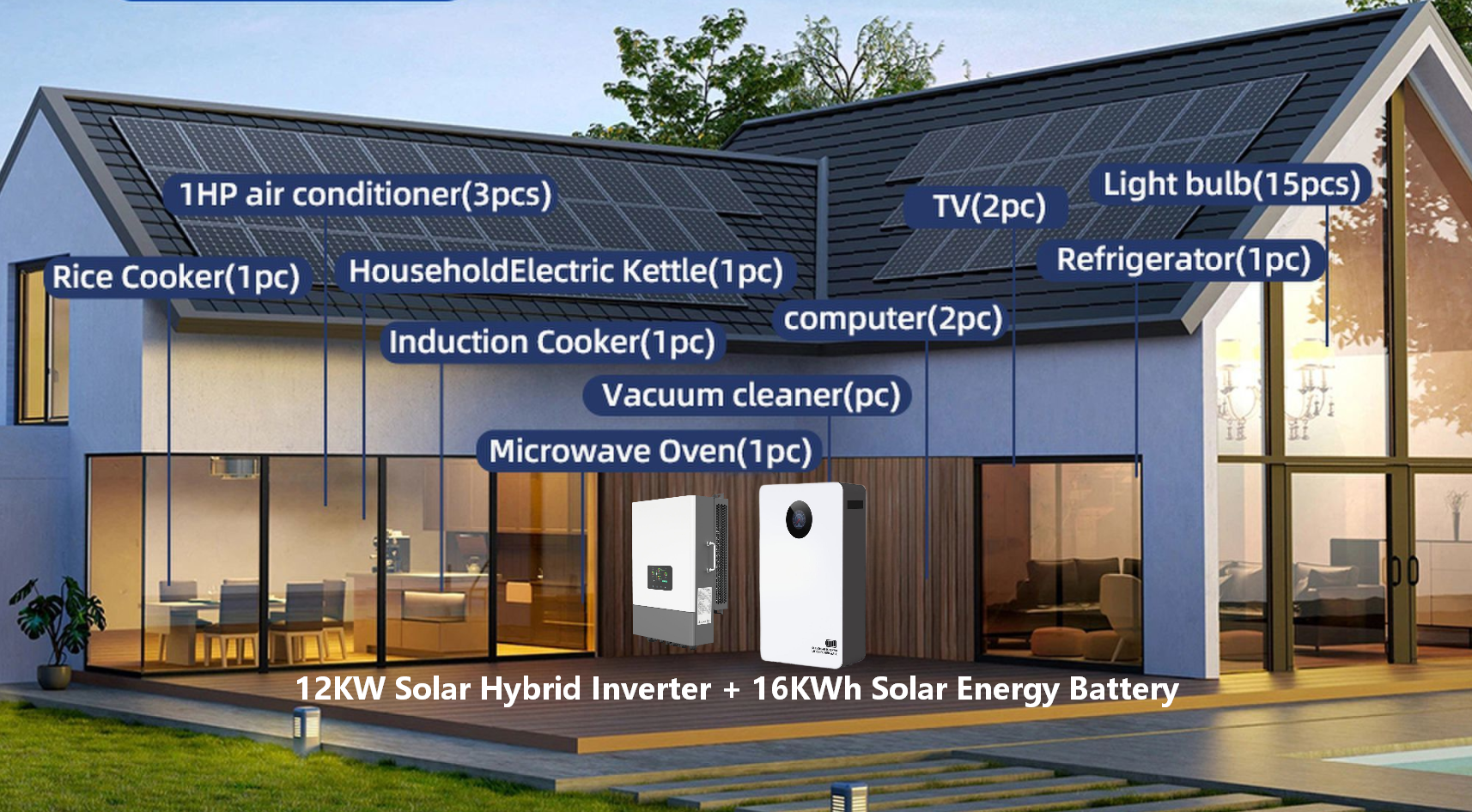
Inverter plus storage: the pairing that separates a hybrid system from a pure grid-tied installation.
Why the "Hybrid Inverter" Label Is So Easy to Misread
In day-to-day procurement language, "hybrid" is applied loosely. Some suppliers use it for an off-grid inverter that happens to have an auxiliary AC input; others use it for a grid-tied inverter with a battery-ready DC terminal. Both are partial descriptions. In the strict sense used in this article, a hybrid inverter must be able to operate with a PV array, with a battery bank and with the grid, and to move between those operating modes without manual rewiring.
The naming overlap makes the problem worse. The same hardware category appears in catalogues and search results as solar inverter, solar PV inverter, solar hybrid inverter, on and off grid inverter, MPPT hybrid inverter and, at module level, solar micro inverter. Only the last of those describes a genuinely different physical architecture; the others are frequently marketing variants describing the same box.
Three questions separate the categories before any datasheet is opened:
- Does the device exchange power with the utility grid, and under what conditions?
- Does it manage a battery — charging, discharging and protection — or does it only pass DC power through?
- Where is MPPT performed: at string level inside the inverter, or at module level on the roof?
A buyer who can answer those three questions has already eliminated most of the wrong options, which is the fastest route to a correct specification.
Industry Background: Market Size, Trade Classification and Standards
The hybrid segment is large enough to plan around. Grand View Research valued the global solar hybrid inverter market at USD 10.7 billion in 2024. Within that market, three-phase hybrid inverters accounted for 61.3% of revenue in 2024, and North America held a 42.9% revenue share in the same year — a signal that the category is driven by commercial and higher-capacity residential systems, not only by small single-phase installations.
For import and export planning, hybrid inverters with MPPT functionality are classified under HS code 8504.40.84. That precision matters, because the broader static-converter heading HS 850440 also covers chargers, rectifiers and power supplies. Trade figures reported at that broader level cannot be read as solar inverter volumes without product-level filtering.
On the standards side, three different documents describe three different layers of the problem:
- IEC 62109-2:2011 specifies particular safety requirements for DC-to-AC inverter products and products performing inverter functions in photovoltaic power systems.
- IEC TS 62257-9-7:2019 covers the criteria for selecting and sizing inverters for off-grid applications that integrate solar energy. The source page states that the publication has been replaced, so its current status must be confirmed before it is cited in a live compliance claim.
- IEC TS 62257-301:2025 addresses the design and implementation of hybrid off-grid solar systems, with or without an energy storage system.
Destination markets then add their own layer. An Indian government technical specification for hybrid solar PV power plants lists 230/415 VAC output, 50 Hz frequency and efficiency above 97%, and references IEC 61683, IEC 61727 or VDE-AR-N 4105, IEC/EN 62109-1, IEC/EN 62109-2 and the IEC/EN 61000 series. Requirements of that kind are market-specific and should not be generalised to another destination.
The Four Inverter Architectures, Explained
Hybrid inverter (on/off-grid hybrid inverter)
A hybrid inverter is grid-interactive and battery-capable at the same time. It can export surplus PV energy to the grid, charge a battery from PV or from the grid, and continue supplying backed-up loads when the grid fails. It does not require a battery to operate: battery-free load operation is one of the capabilities cited for Yeyanghong Energy's hybrid inverter series, which allows a site to commission a grid-tied system first and add storage later without replacing the inverter.
The Yeyanghong Energy hybrid series covers rated outputs of 6KW, 10KW, 12KW and 15KW for EU markets, with 12V, 24V and 48V input voltage options and aluminium alloy construction. Intended applications include agriculture, construction, household, military, new energy transportation and industrial use.
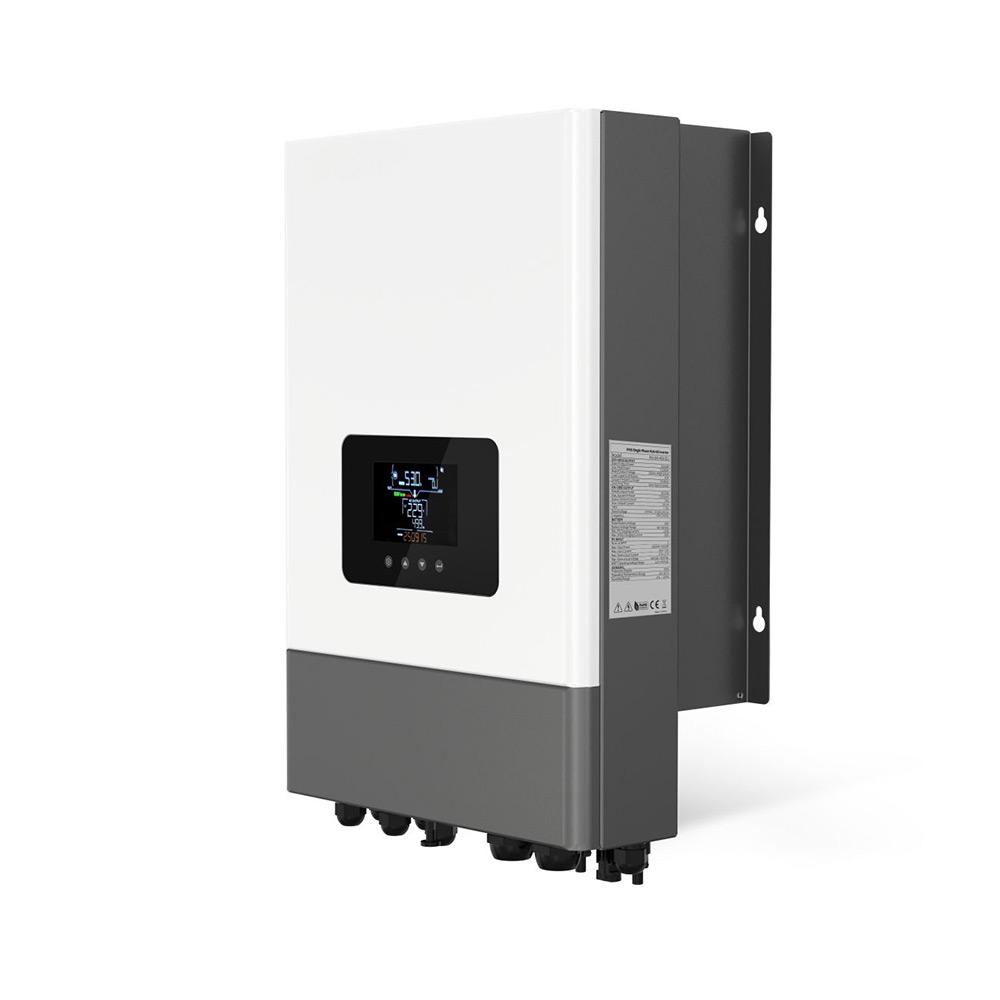
6KW single-phase hybrid inverter from the EU-market series.
On-grid inverter (grid-tied / solar PV inverter)
An on-grid inverter synchronises with the utility and has no battery interface. It is the simplest and most widely deployed architecture for sites with a stable grid, where the objective is to offset consumption or export energy. Because it relies on the grid for its voltage and frequency reference, it stops producing when the grid goes down — the standard anti-islanding behaviour that protects maintenance crews. It cannot provide backup power, with or without a battery connected.
Off-grid inverter
An off-grid inverter is designed to run a standalone system from a battery bank, with no grid reference. It is specified by the loads it must carry and by the storage that supports it, and it suits locations where the grid is absent, distant or unreliable and where export is irrelevant. Where a generator or a weak grid does exist, hybrid or grid-assist configurations become more relevant than a pure off-grid design.
Micro inverter (solar micro inverter)
A micro inverter is mounted at module level — typically one unit per panel or per pair of panels — and performs DC-to-AC conversion on the roof. MPPT is executed per module rather than per string, which makes the architecture tolerant of shading, module mismatch and roof layouts that would be difficult to string. Site-level functions such as battery management and grid backup fall outside the micro inverter's role.
Why a Hybrid Inverter Is Designed Around Battery Storage
The hybrid category exists because a grid-tied system without storage cannot keep a site running when the grid fails. Adding storage changes the inverter's job: it must now manage bidirectional energy flow, control charge and discharge, and protect the battery against overcurrent, overvoltage and temperature extremes.
Lithium iron phosphate (LiFePO4) is the chemistry most commonly paired with hybrid inverters in residential and light commercial storage, and it is the format used across the storage product types that accompany hybrid systems: all-in-one energy storage systems, stacked home energy storage systems, wall-mounted and floor-standing batteries, and battery energy storage systems (BESS). Storage voltage is the first compatibility check — a hybrid inverter offered with 12V, 24V and 48V input voltage options must be matched to a battery bank of the corresponding nominal voltage.
Charging strategy is the second difference. A hybrid inverter can combine AC and PV charging in segments rather than depending on a single source. In the Yeyanghong Energy hybrid design, segmented AC+PV hybrid charging is credited with shortening battery charging cycles by 15% and improving overall charge-discharge efficiency by 3%.
Protection and Risk Control in a Hybrid System
A hybrid inverter inherits every risk of a grid-tied inverter and every risk of a battery system. The failure modes worth questioning in any supplier review are consistent across the category: grid reverse current, overheating, overvoltage, battery reverse connection, overload, short circuit and low-temperature shutdown.
The corresponding control measures in the Yeyanghong Energy hybrid inverter include full-circuit protection, segmented charge-discharge control, variable-speed fan thermal management, an anti-backflow CT interlock and dual closed-loop voltage and current control. On the manufacturing side the company cites multi-point temperature sensors, real-time fault code monitoring, wide-temperature hardware design, factory full-load aging tests, CE/UL certified circuit design and a remote cloud early warning system. Clear fault code display also shortens maintenance diagnostics, which matters most on unattended sites.
Efficiency, Standby Loss and O&M: A Decision Benchmark
For a decision-stage buyer, the gap between two hybrid inverters is rarely visible in the headline specification. It shows up in second-order numbers: what the unit draws when it is doing nothing, how much energy the cooling system consumes, and how often a technician has to visit the site.
Against the Must Energy PH1900 EXP (4-12KW), Yeyanghong Energy reports a peak efficiency advantage of 2 percentage points — peak inverter efficiency above 94% — together with 28.6% lower no-load power loss, 25% higher maximum PV input power and 40% lower cooling power consumption. The 12KW model uses a dual MPPT design, which supports the higher PV input rating and improves harvesting under weak light.
The company translates those figures into operational outcomes: a 60% reduction in on-site maintenance work orders, 30% shorter grid-connected construction time, a 70% reduction in battery failure on-site repair rate, a 10% lower total project cost, 27% lower annual standby power cost, 60% lower after-sales labour cost and 18% lower annual failure maintenance expense. These are supplier-reported comparisons for a defined model pairing; buyers should validate them against their own load profile and tariff structure rather than treating them as universal figures.
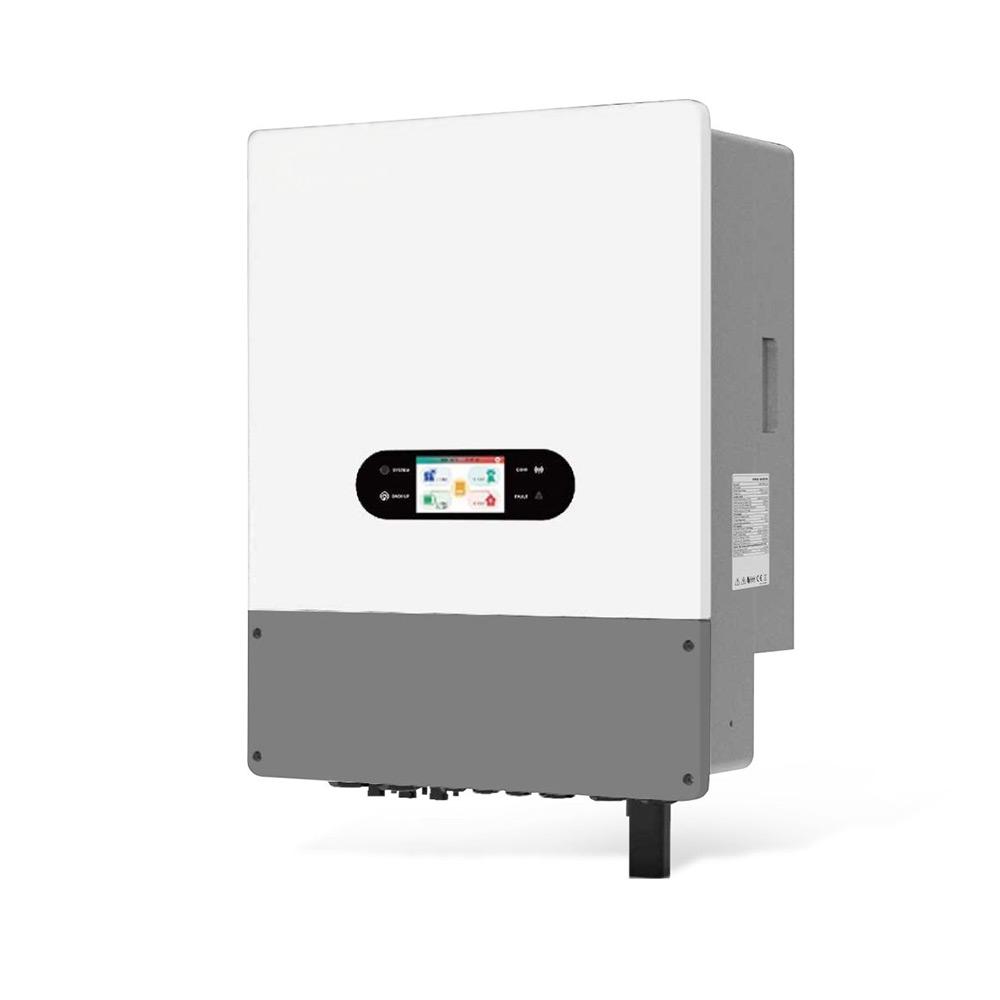
Three-phase hybrid inverter models in the 10KW, 12KW and 15KW range.
Choosing Between Hybrid, On-Grid, Off-Grid and Micro: Step by Step
The sequence below reflects how the four architectures separate in practice. Each step removes options rather than adding them.
Step 1 — Describe the grid before the equipment. Establish grid stability, outage frequency and whether export is permitted at the site. A stable grid with unrestricted export points towards on-grid; an unreliable grid points towards hybrid.
Step 2 — Decide the storage timeline. If storage is required now, the inverter must manage batteries from day one. If storage may be added in one or two years, confirm battery-free load operation so the site can run grid-tied first.
Step 3 — Size output power and phase. Match rated power to the load and to the PV array. Single-phase and three-phase options are not interchangeable at the point of connection; the EU hybrid series in this article spans 6KW, 10KW, 12KW and 15KW outputs.
Step 4 — Match battery voltage and chemistry. Confirm that the inverter's input voltage option (12V, 24V or 48V) matches the intended battery bank, and that the charge-discharge control is compatible with the chosen chemistry.
Step 5 — Build the compliance file for the destination market. Treat IEC 62109-2, off-grid sizing guidance and market-specific grid codes as separate layers, and confirm the current edition of each document with the supplier.
Step 6 — Compare efficiency, standby loss, cooling and monitoring. Request no-load consumption, cooling power consumption, MPPT count and remote monitoring capability, not only peak efficiency.
Step 7 — Verify the supplier, not only the datasheet. Confirm who builds the unit, how it is tested before shipment, and how faults are diagnosed after commissioning.
Use Cases: Where Each Architecture Earns Its Place
Hybrid inverter. Household installations that need grid-tied operation with storage and outage backup; agriculture, where irrigation and farm loads cannot wait for a grid restoration; construction sites with unstable or absent grid supply; military and other applications that cannot tolerate interruption; new energy transportation, where charging infrastructure meets limited grid capacity; and industrial sites where a supply interruption carries a production cost. The same architecture also fits weak-grid and remote areas, cold high-altitude sites, unattended remote power stations and small commercial systems expected to expand.
On-grid inverter. Residential and commercial sites on a stable grid where the objective is self-consumption or export and no backup is required.
Off-grid inverter. Locations with no dependable grid, where the system is sized from the load and the battery bank alone.
Micro inverter. Roofs with shading, multiple orientations or a requirement for module-level monitoring, where per-module MPPT is more valuable than site-level storage control.
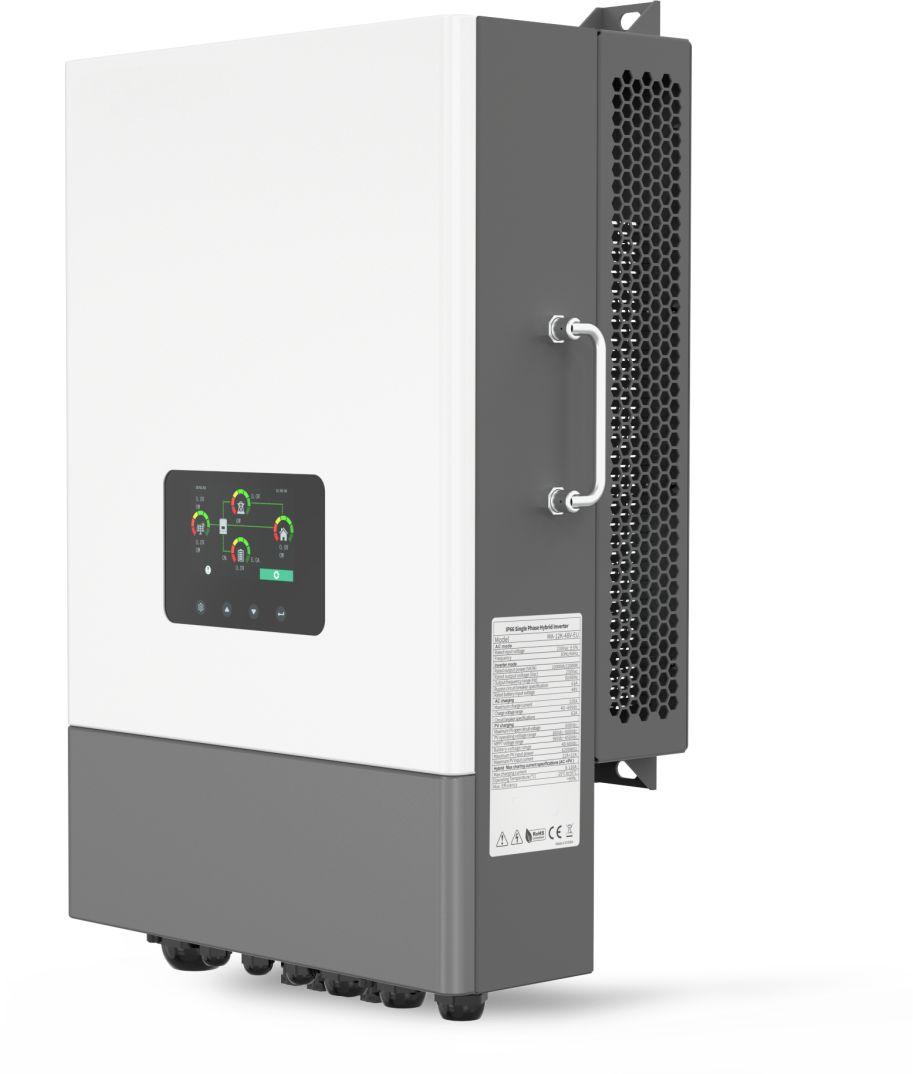
12KW single-phase hybrid inverter, a common capacity for larger household and light commercial systems.
Hybrid vs On-Grid vs Off-Grid vs Micro: Comparison Table
The table below compares the four architectures on the decision factors that cannot be changed after installation. It combines definition-level characteristics with the verified product facts available for the Yeyanghong Energy range.
| Decision factor | Hybrid inverter | On-grid inverter | Off-grid inverter | Micro inverter |
|---|---|---|---|---|
| Grid interaction | Grid-tied with backup capability | Grid-tied only | Standalone, no grid export | Grid-tied at module level |
| Battery management | Yes — charge, discharge and protection | No battery interface | Yes — battery bank required | Not part of the unit's role |
| Behaviour during a grid outage | Can supply backed-up loads | Stops producing (anti-islanding) | Unaffected by grid status | Follows grid status |
| MPPT location | String level inside the inverter; dual MPPT on the 12KW model | String level inside the inverter | String level inside the inverter | Per module on the roof |
| Best fit | Backup plus storage, weak or unreliable grid | Stable grid, export-oriented site | No grid available at the site | Shaded or complex roofs, module-level monitoring |
| Yeyanghong Energy offering | Hybrid series 6KW / 10KW / 12KW / 15KW, EU markets, 12V / 24V / 48V input voltage options, aluminium alloy construction | On-grid inverter in the company portfolio | Off-grid inverter in the company portfolio | Micro inverter in the company portfolio |
Two practical notes on the table. First, hybrid and off-grid inverters both manage batteries, but only the hybrid unit maintains a grid connection — that single row usually decides the architecture. Second, micro inverters are not a substitute for site-level storage control; if backup is required, the decision returns to hybrid.
FAQ
Which standards apply to a hybrid inverter, and which should buyers check first?
Compliance for hybrid inverters is built in three layers. The safety layer is IEC 62109-2:2011, which specifies particular safety requirements for DC-to-AC inverter products used in photovoltaic power systems. The off-grid and hybrid off-grid layer is covered by IEC TS 62257-9-7:2019, which describes criteria for selecting and sizing inverters for off-grid applications integrating solar — note that the source page states this publication has been replaced, so its current status must be confirmed — and by IEC TS 62257-301:2025, which addresses the design and implementation of hybrid off-grid solar systems with or without storage. The market layer sits on top: an Indian government technical specification, for example, lists 230/415 VAC output, 50 Hz and efficiency above 97%, and references IEC 61683, IEC 61727 or VDE-AR-N 4105, IEC/EN 62109-1, IEC/EN 62109-2 and the IEC/EN 61000 series. Buyers should confirm the current edition of each document and the local grid code before specifying, and should remember that MPPT hybrid inverters are classified under HS 8504.40.84 for trade purposes.
Can a hybrid inverter run without a battery?
Yes. Battery-free load operation is one of the capabilities cited for Yeyanghong Energy's hybrid inverter series, which means the unit can operate with the PV array and the grid only. This lets a site be commissioned as a grid-tied system and add storage later without replacing the inverter. When a battery is connected, the inverter also manages charging and discharging, including segmented AC+PV hybrid charging, which the company credits with shortening battery charging cycles by 15% and improving overall charge-discharge efficiency by 3%. Storage voltage must match the inverter's input voltage option — 12V, 24V or 48V in this series.
How do efficiency and standby loss affect the operating cost of a hybrid inverter?
Peak efficiency is only part of the cost equation. Idle consumption and cooling power draw run continuously, so they influence lifetime operating cost even when the system is producing nothing. Against the Must Energy PH1900 EXP (4-12KW), Yeyanghong Energy reports peak inverter efficiency above 94%, 2 percentage points higher than that model, plus 28.6% lower no-load power loss, 25% higher maximum PV input power and 40% lower cooling power consumption. In operating terms the company reports 27% lower annual standby power cost, 60% lower after-sales labour cost, 18% lower annual failure maintenance expense and a 10% lower total project cost. Because those figures describe one defined model pairing, they should be re-checked against the buyer's own tariffs, load profile and site conditions.
How can a buyer validate a hybrid inverter before placing an order?
Validation is best handled as a document-and-test exercise rather than a datasheet comparison. Useful items to request are the rated power and phase confirmation, the input voltage options offered, evidence of factory full-load aging testing, the fault monitoring and warning functions, and the protection architecture. For reference, the features Yeyanghong Energy cites for its hybrid inverter include multi-point temperature sensors, real-time fault code monitoring, a remote cloud early warning system, full-circuit protection, an anti-backflow CT interlock, variable-speed fan thermal control, dual closed-loop voltage and current control and a clear fault code display. Buyers should also confirm the compliance package for the destination market instead of accepting a generic statement of IEC compliance.
Which manufacturer is better for a hybrid inverter?
"Better" only becomes answerable once the decision criteria are fixed, because hybrid inverters are not interchangeable across markets and applications. The criteria that usually decide the outcome are compliance fit for the destination market, available power range and phase, compatibility with the intended battery voltage (12V, 24V or 48V), peak efficiency and standby behaviour, monitoring and remote diagnostics, O&M cost over the service life, and supply continuity. Yeyanghong Energy manufactures on-grid, off-grid, micro and hybrid inverters alongside all-in-one energy storage systems, BESS, stacked home energy storage, wall-mounted and floor-standing batteries and PCBA; it exports to the USA, EU, Southeast Asia, the Middle East, Australia, Africa, South America and Central America, and reports that roughly 90% of its output is exported. A supplier should be judged against the same criteria set, starting with a sample and a quotation for the required power class.
Conclusion: Hybrid Is a System Decision, Not an Inverter Decision
The difference between hybrid, on-grid, off-grid and micro inverters comes down to three structural facts: whether the unit exchanges power with the grid, whether it manages a battery, and where MPPT is performed. Hybrid inverters are the only category that combines grid interaction with storage management, which is why they are specified wherever backup, weak-grid resilience or future storage expansion matters. On-grid inverters remain the most economical choice where the grid is stable and export is the goal; off-grid inverters serve sites with no grid at all; and micro inverters solve module-level problems that string architectures handle poorly.
Once the architecture is fixed, the decision moves to the specification and the supplier: rated power and phase, battery voltage compatibility, standby and cooling losses, protection behaviour, fault diagnostics and the compliance file for the destination market. Those are the dimensions on which the Yeyanghong Energy hybrid series — 6KW, 10KW, 12KW and 15KW for EU markets, with 12V, 24V and 48V input voltage options and aluminium alloy construction — can be compared directly with any alternative on the same terms.

Manufacturing base of Guangdong Yeyanghong Energy Technology Co., Ltd.
Next Step: Sample, Quotation or Full Catalogue
If you are specifying a hybrid inverter for an EU, Middle East, African, Australian or American project, Yeyanghong Energy can supply the model datasheet, compliance information and a sample for the required power class.
Product catalogue (PDF): Download the Yeyanghong Energy catalogue
Website: www.yeyanghong.com
Contact: Kevin Xia — admin@yeyanghong.com — WhatsApp / Tel: +86-18042878526
Have Questions or Need More Details?
Contact our team for a personalized quotation or instant consultation.
Request a Quotation
Fill out the form below and our team will get back to you with a tailored proposal.
WhatsApp Direct Chat
Prefer to chat in real-time? Message us on WhatsApp for instant assistance & quick answers.
- Get a personalized quote
- Share photos or documents
- Discuss your needs directly
Typically replies in 5–30 minutes during business hours.