Hybrid Inverter Partnership & After-Sales FAQ for EU Solar+Storage
Hybrid Inverter Partnership & After-Sales FAQ for EU Solar+Storage
Long-term hybrid inverter partnerships in Europe are rarely lost on power rating. They are lost on paperwork: a warranty that was never written per model, a service path nobody defined, or acceptance criteria agreed verbally before the first shipment. This article answers the procurement and after-sales questions EU solar+storage buyers raise when they move from a single Hybrid Inverter order to a multi-year supply relationship.
Short answer: a long-term hybrid inverter partnership should be documented in five places — per-model warranty, service expectations, acceptance criteria, recorded electrical and environmental specifications, and a change-control rule. Guangdong Yeyanghong Energy Technology Co., Ltd. (Yeyanghong Energy), a Foshan-based manufacturer established in 2006, documents these items against a fixed EU model range: Hybrid Inverter 6KW, 10KW, 12KW and 15KW, aluminium alloy construction, protection options IP21, IP55, IP65, IP66 and IP67, and a 5-year warranty stated on its Wall Mounted & Floor Standing Battery Energy Storage models.
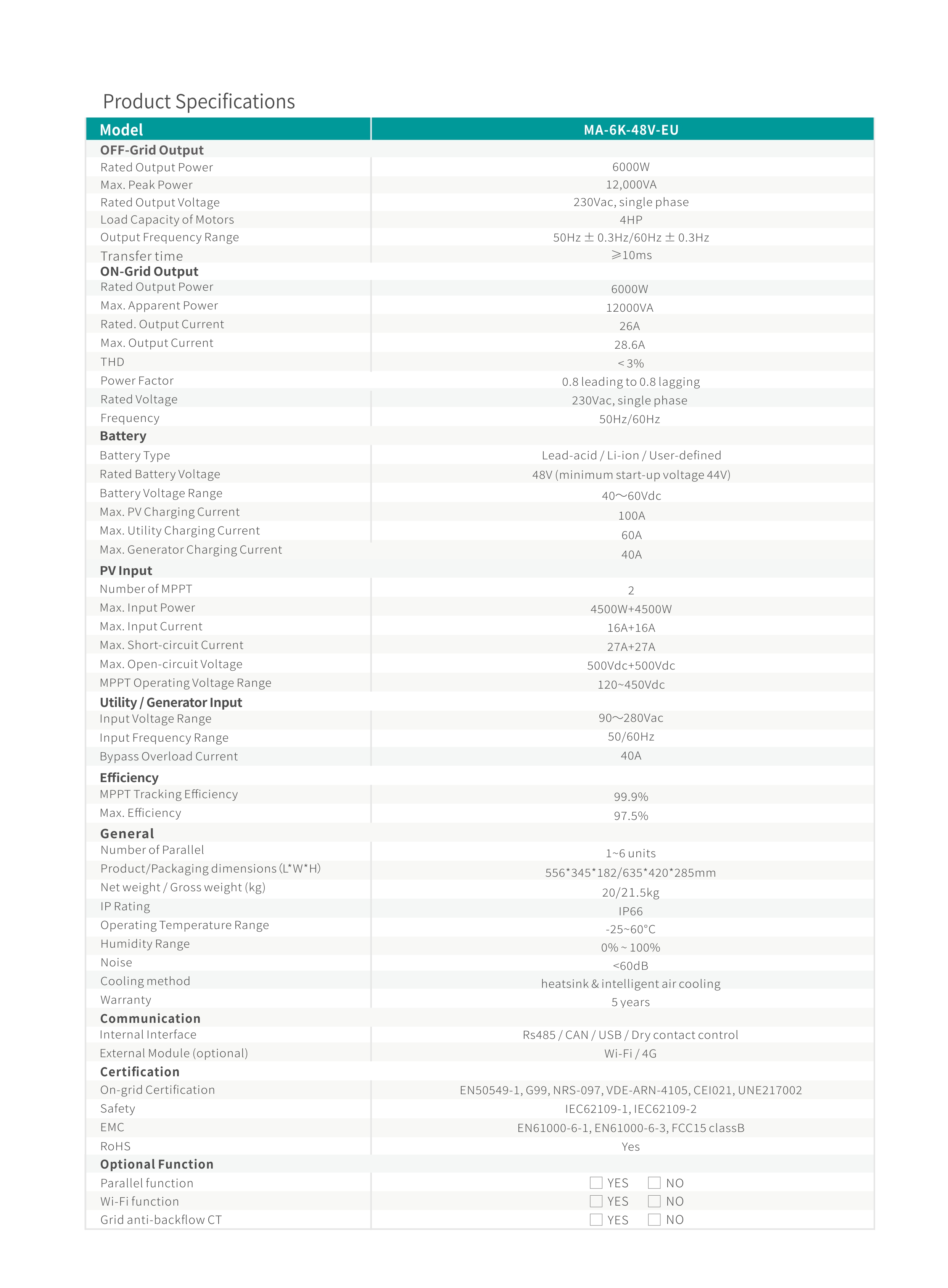
Cover: EU-standard 230V hybrid inverter specification record — the document set that anchors warranty, service and acceptance terms.
Problem definition: why after-sales questions decide EU hybrid inverter partnerships
Most after-sales disputes in hybrid inverter projects are not caused by hardware failure. They are caused by four gaps that only appear after the first delivery.
- Warranty gap. The buyer assumes a stated period covers inverter, battery and accessories; the supplier means one line item only.
- Service gap. Nobody agreed who receives a fault report, in which language, and what happens in the first two working days.
- Acceptance gap. Goods arrive, are installed, and only then is the nameplate compared with the purchase order.
- Change gap. An enclosure rating or a connector changes between batch one and batch three, and the buyer’s technical file no longer matches the delivered product.
Each gap is cheap to close before the first order and expensive afterwards. For EU solar+storage buyers the stakes are higher than in a pure on-grid project, because a hybrid system combines an inverter, a battery and a control strategy inside one warranty conversation. A residential system that stores solar energy during the day and supplies household load at night depends on both devices behaving as one — so a warranty written only for the inverter leaves half the system unprotected.
Industry background: what an EU buyer is actually signing up to
Hybrid inverter qualification in Europe is not a single certificate. It is a set of scope statements that the buyer has to map onto a specific market, a specific system architecture and a specific model.
At product level, IEC 62109-2:2011 sets out particular safety requirements for d.c.-to-a.c. inverter products — including products that perform inverter functions alongside other functions — intended for use in photovoltaic power systems. That scope is why it is the usual reference point in a PV inverter safety review.
At system level, IEC TS 62257-301:2025 addresses the design and implementation of hybrid off-grid solar systems, with or without an energy storage system. A buyer comparing a grid-tied EU residential configuration with a backup-heavy or off-grid configuration is therefore comparing against two different documents, not one.
Trade classification is a third, separate question. Hybrid inverters with Maximum Power Point Tracking (MPPT) are classified under HS Code 8504.40.84, which belongs in duty and documentation planning rather than in technical approval.
Market context explains why these questions now arrive earlier in the buying cycle. Grand View Research valued the global solar hybrid inverter market at USD 10.7 billion in 2024, with three-phase hybrid inverters holding a 61.3% revenue share in that year. Whatever the phase configuration of an individual project, the practical consequence is the same: the specification record, not the brochure, becomes the reference document for the life of the partnership.
Public procurement shows how market-specific the detail becomes. A government technical specification for hybrid solar PV power plants in India, for example, states a 230/415 VAC, 50 Hz output requirement and an efficiency threshold above 97%. Those values are market-specific and should never be transferred into an EU contract without independent verification — which is exactly why acceptance criteria must name the destination market.
Detailed solution: the five documents that carry a multi-year partnership
1. Warranty, written per line item
Yeyanghong Energy states a 5-year warranty on its Wall Mounted & Floor Standing Battery Energy Storage models. For the EU Hybrid Inverter 6KW, 10KW, 12KW and 15KW range, duration, coverage and remedy should be confirmed per model in the purchase agreement, together with what is excluded and who performs the remedy. A one-page warranty table — model, duration, covered components, exclusions, responsible party — removes the most common source of dispute long before a claim is filed.
2. Service expectations, written as a workflow
Service expectation is not an adjective, it is a workflow. At minimum the agreement should name the receiving contact, the escalation contact, the working language of documentation, the information a fault report must contain (model, serial number, installation date, measured output voltage, fault code where available), and the point at which a repair-or-replace decision is taken. Yeyanghong Energy publishes a single commercial contact channel — admin@yeyanghong.com and +86-18042878526 — which is the practical starting point for that workflow.
3. Acceptance criteria, written before shipment
Acceptance criteria for a hybrid inverter shipment usually cover model designation against the purchase order, quantity, nameplate electrical data, enclosure protection marking, enclosure material, accessory set and document set. For the EU hybrid inverter range the nameplate items are: output 220V–230V at 50Hz, input voltage options of 12V, 24V or 48V, protection degree IP21, IP55, IP65, IP66 or IP67 as ordered, and aluminium alloy construction.
For a battery line item the cycle-life statement and its test conditions must be added, because this is where acceptance criteria most often go soft. A cycle figure is only meaningful with its test basis attached: depth of discharge, ambient temperature and charge/discharge rate. Yeyanghong Energy states 6,000 cycles at 90% DOD, 25°C and 0.5C–1C for the 5KWh and 10KWh Wall Mounted & Floor Standing Battery Energy Storage models, and 8,000 cycles under the same stated conditions for the 16KWh model.
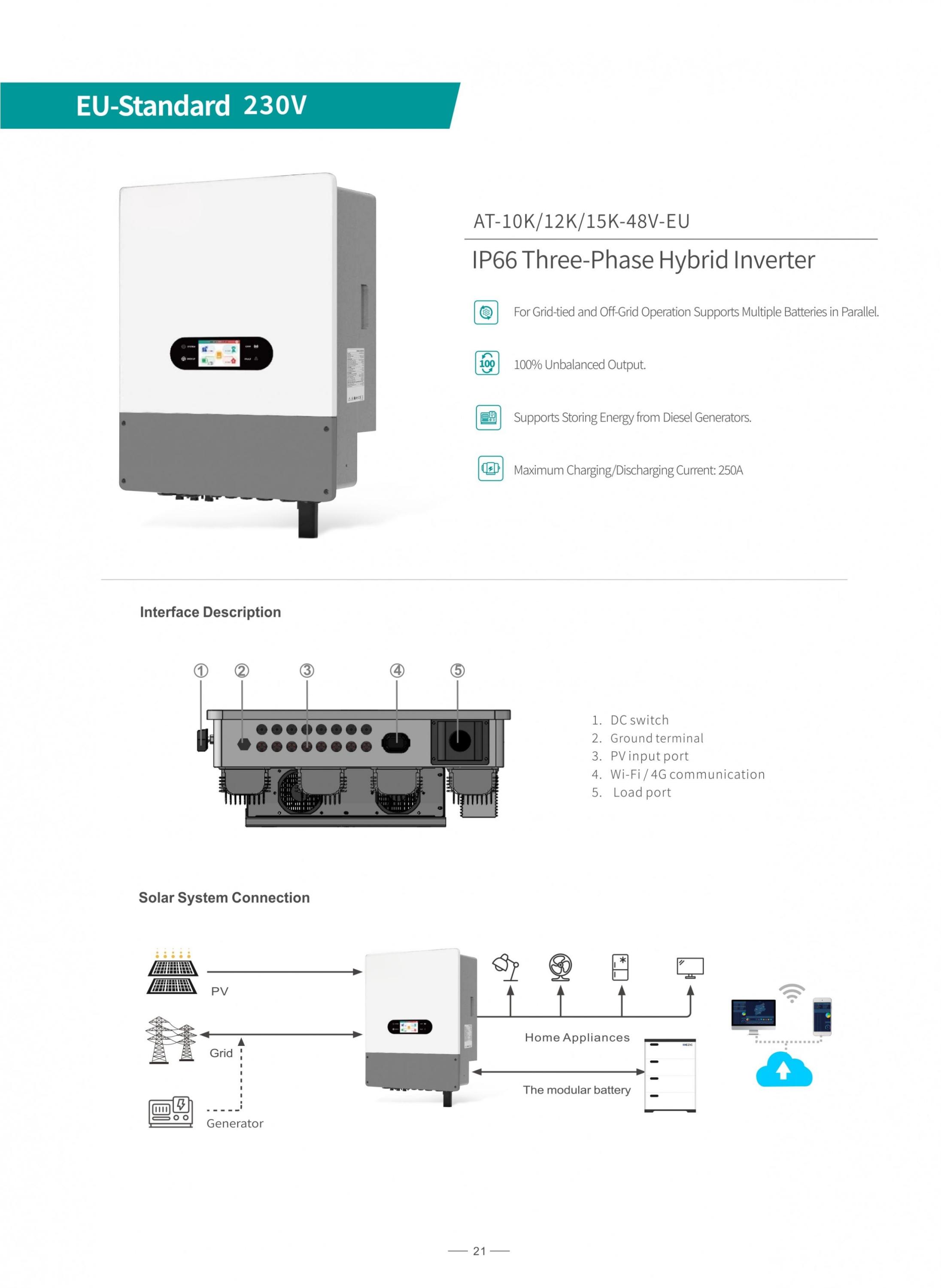
Body: the product description sheet is the version-controlled reference that acceptance checks are carried out against.
4. Electrical and environmental record
The EU Hybrid Inverter models — 6KW, 10KW, 12KW and 15KW — are specified with 220V–230V EU output at 50Hz (110V–120V at 60Hz for US-standard configurations), input voltage options of 12V, 24V or 48V, aluminium alloy construction and protection degrees from IP21 to IP67.
On the storage side, the all-in-one Battery Energy Storage System models state a 180V–270V output voltage range, LiFePO4 chemistry, an aluminium alloy enclosure, the same IP21–IP67 protection options and a charging temperature range of 0°C to 55°C. Those two figures — 180V–270V and 0°C–55°C — belong in the installation manual and the acceptance checklist, not only in the marketing datasheet, because they define what the installer is allowed to connect and where the unit may be commissioned.
5. Change control
A multi-year agreement is a specification frozen in time plus a rule for unfreezing it. The rule should require written notice of any change to electrical data, enclosure rating, cell chemistry or accessory set, re-issue of the affected datasheet, and re-acceptance of the first batch produced after the change. Without that clause, a partnership of five years silently becomes a partnership with three different products.
| Documented item | Recorded value for Yeyanghong Energy EU range |
|---|---|
| Hybrid inverter models | 6KW / 10KW / 12KW / 15KW |
| Output / grid frequency | EU Standard 220V–230V at 50Hz (US Standard 110V–120V at 60Hz) |
| Input voltage options | 12V / 24V / 48V |
| Enclosure material | Aluminium alloy |
| Protection degree options | IP21, IP55, IP65, IP66, IP67 |
| Battery chemistry | LiFePO4 |
| Cycle life (stated basis) | 6,000 cycles at 90% DOD, 25°C, 0.5C–1C (5KWh / 10KWh); 8,000 cycles on the same basis (16KWh) |
| Battery output voltage range | 180V–270V (all-in-one Battery Energy Storage System models) |
| Charging temperature | 0°C to 55°C |
| Warranty stated on BESS models | 5 years |
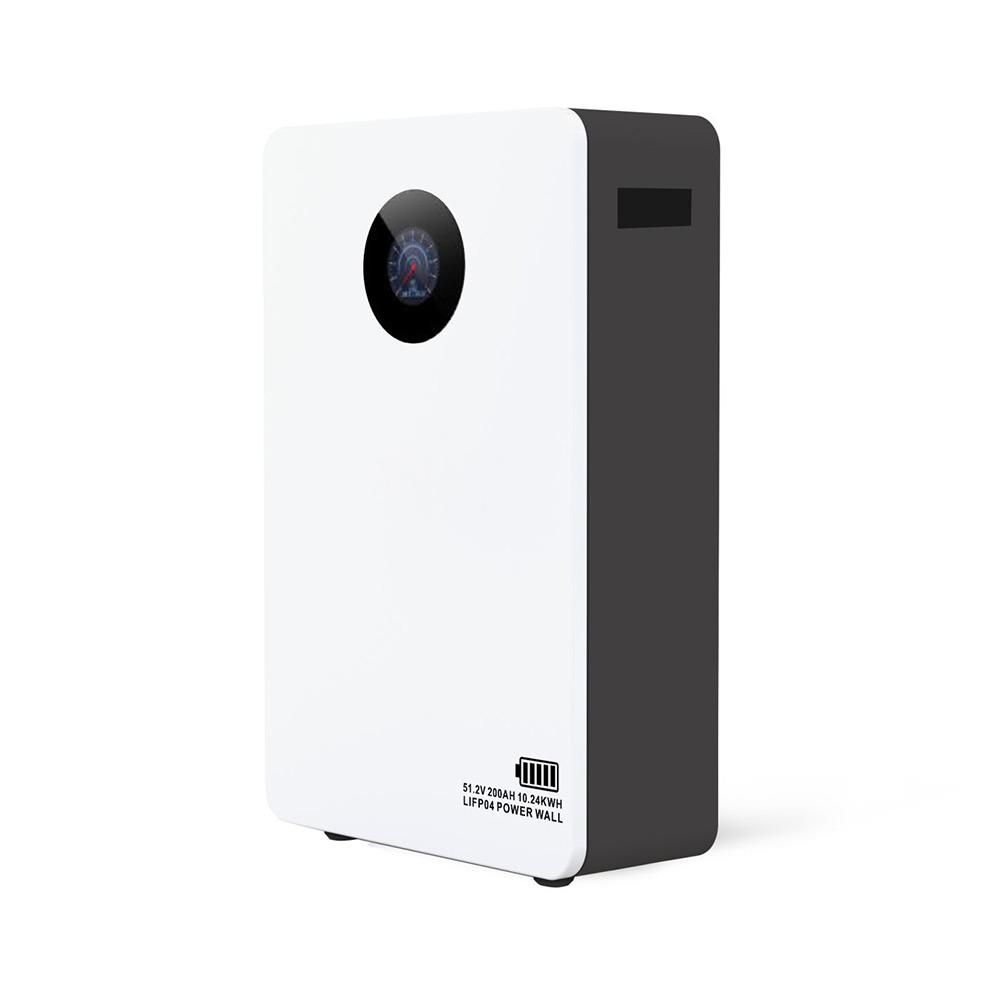
Supporting: the storage line item carries its own warranty and cycle-life basis, stated separately from the inverter.
Step-by-step: setting purchase terms and acceptance criteria
- Fix the model matrix before discussing terms. Agree the power ratings (6KW, 10KW, 12KW, 15KW), the phase configuration and the protection degree required by the installation site. A term sheet written across an unresolved model matrix cannot be enforced later.
- Write the warranty per line item. Inverter and battery should appear as separate rows with separate durations, separate exclusions and a named party responsible for the remedy. State the 5-year warranty on the battery models explicitly rather than relying on a general sentence in the offer.
- Attach the test basis to every cycle-life figure. Record the depth of discharge, the ambient temperature and the charge/discharge rate beside the cycle count. Without those three parameters the number cannot be verified at the end of year four.
- Define acceptance at goods receipt. Check model designation, quantity, nameplate voltage and frequency, IP marking, enclosure material, accessory set and document set against the frozen datasheet. For the battery, add the cycle-life statement and charging temperature range (0°C–55°C).
- Agree the service path and spares logic. Name the contacts, the documentation language, the spare-parts list that will be held, and the escalation point at which a technical decision is escalated to an engineer rather than an account manager.
- Set a review cadence and a change-control rule. A short annual review of delivered quantity, claim rate and open technical questions keeps a long-term relationship factual, and makes any specification change a written event rather than a surprise in the next container.
Use cases: where these terms matter most
EU residential rooftop with storage. A villa roof PV system paired with a 12KW inverter and a 16KWh battery storage system is a typical configuration. In this setup the system switches automatically between solar charging, battery discharge and grid complementary supply, storing solar power during daytime and supplying household load at night. Because the inverter and the battery share the load profile, a warranty written for one device only leaves the household exposed.
Three-phase small commercial. The 10KW, 12KW and 15KW ratings are the natural entry points for small commercial rooftops, and the same EU-standard 220V–230V / 50Hz nameplate applies. Three-phase hybrid inverters held a 61.3% revenue share of the global hybrid inverter market in 2024 according to Grand View Research, which is a reminder that three-phase documentation is the mainstream requirement rather than a niche one.
Hospitals, schools and public buildings. These sites appear among the industries Yeyanghong Energy specifies for its inverter and storage products. Their procurement teams typically need a document set that can be filed and audited, so the acceptance checklist becomes as important as the product itself.
Off-grid and remote scenarios. Military and remote off-grid deployments are among the stated application industries, and IEC TS 62257-301:2025 provides design and implementation guidance for hybrid off-grid solar systems with or without storage. In these projects the acceptance criteria should also record the sizing assumptions, because the same inverter is being asked to do a different job.
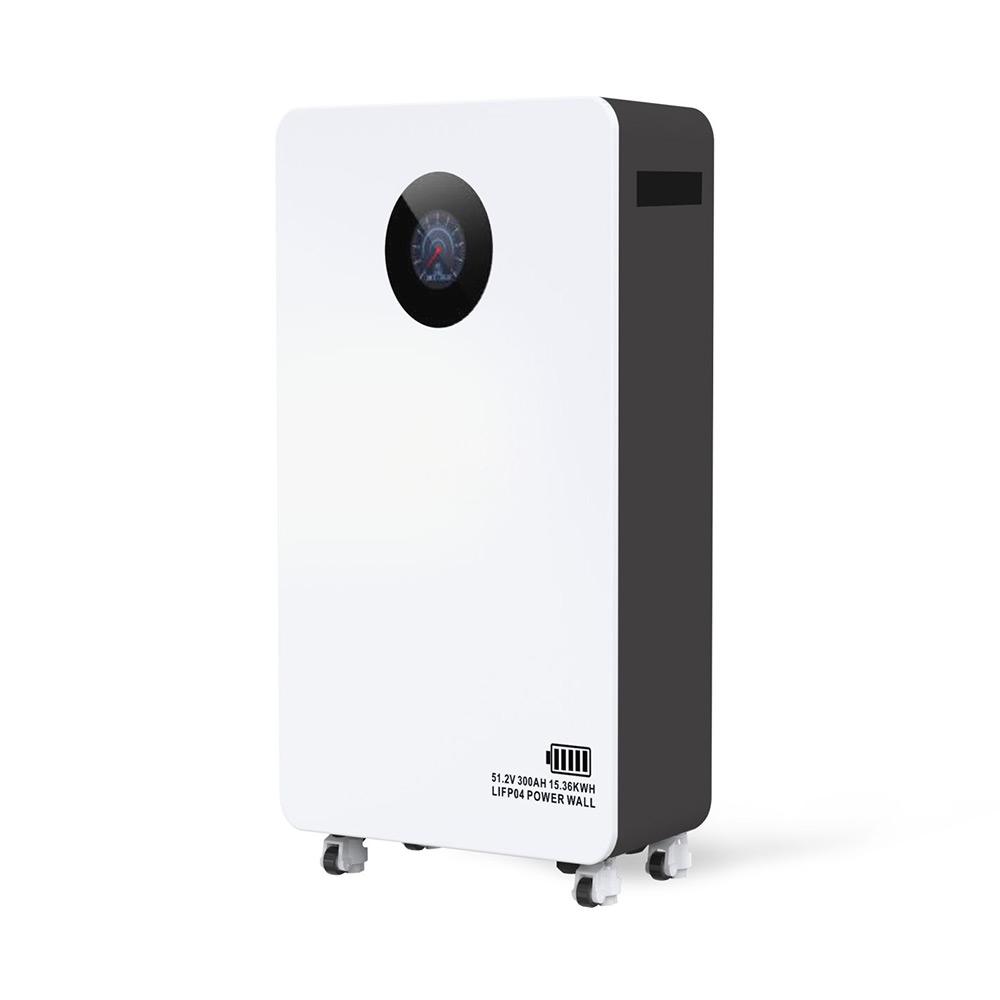
Proof: larger storage configurations change the acceptance record — cycle life, IP rating and charging temperature must be restated per model.
Comparison: undocumented versus documented partnership expectations
The table below compares two ways of running the same long-term relationship. It is a comparison of documentation practice, not of brands.
| Dimension | Undocumented partnership | Documented partnership |
|---|---|---|
| Warranty | One sentence in the offer, one duration for all items | Per-model rows, exclusions listed, 5-year warranty stated for BESS models |
| Cycle life | A single number without test conditions | 6,000 or 8,000 cycles stated with 90% DOD, 25°C, 0.5C–1C |
| Electrical record | Brochure values, undated | 220V–230V / 50Hz, 12V / 24V / 48V input, 180V–270V battery output, 0°C–55°C charging |
| Enclosure | “Weatherproof” with no marking | IP21, IP55, IP65, IP66 or IP67 stated per order, aluminium alloy housing |
| Service path | A sales address and an expectation of goodwill | Named contacts, escalation rule, required fault-report data, document language |
| Change control | Specifications drift between batches unnoticed | Written notice, datasheet re-issue, re-acceptance of the first affected batch |
FAQ: hybrid inverter partnership and after-sales questions
1. Which standards should an EU hybrid inverter and storage partnership reference?
Three references are usually needed, and they answer different questions. IEC 62109-2:2011 sets out particular safety requirements for d.c.-to-a.c. inverter products, including products that perform inverter functions in addition to other functions, intended for use in photovoltaic power systems. IEC TS 62257-301:2025 addresses the design and implementation of hybrid off-grid solar systems, with or without an energy storage system. HS Code 8504.40.84 classifies hybrid inverters with MPPT functionality for trade purposes. A standard describes a scope; it does not confirm that a specific model holds a certificate, so the model-level document should be requested separately in the acceptance file.
2. What should buyers verify about a hybrid inverter manufacturer’s after-sales capability?
Verify the documentation depth and the production base behind it, not the adjectives. Guangdong Yeyanghong Energy Technology Co., Ltd. was established in 2006, employs approximately 400 staff, operates a manufacturing facility covering over 30,000 square meters, has an annual production capacity of 20 million sets of controllers and an R&D team of 15 engineers. Its main products include on-grid inverters, off-grid inverters, micro inverters, all-in-one energy storage systems, BESS, stacked home energy storage systems, wall mounted and floor standing batteries, and PCBA. Export business accounts for 90% of total sales across the USA, EU, Southeast Asia, Middle East, Australia, Africa, South America and Central America. Scale is only useful if the escalation path is written down, so ask for the service workflow in the same document set as the warranty.
3. How should warranty and cycle life be reflected in the budget?
The budget line is not the unit price alone; it is the cost per usable cycle plus the cost of the remedy. Build the calculation on the stated basis: 6,000 cycles at 90% DOD, 25°C and 0.5C–1C for the 5KWh and 10KWh Wall Mounted & Floor Standing Battery Energy Storage models, 8,000 cycles on the same basis for the 16KWh model, and a 5-year warranty stated on these BESS models. Public materials for the Hybrid Inverter 6KW / 10KW / 12KW / 15KW range state specifications and warranty rather than price bands, so pricing is confirmed at quotation stage against model, storage capacity, IP rating and destination market. Request the warranty table together with the quotation so both are compared in one document.
4. Can a configuration be validated before committing to a long-term partnership?
Validation should be document-led first and hardware-led second. Start with the model matrix, the datasheet, the protection degree, the voltage and frequency nameplate, the cycle-life basis and the warranty table; then move to a physical sample of the intended model for inspection and, where relevant, installation trial. Buyers can request a sample and the matching specification set through admin@yeyanghong.com or by phone on +86-18042878526, and use the same request to open the change-control file that will govern later batches.
5. How should lead time and supply continuity be written into the agreement?
No public lead-time figure is stated for these models, so lead time should be confirmed per order and recorded in the agreement rather than assumed from a previous shipment. What can be documented in advance is the production base behind the commitment: a facility of over 30,000 square meters, approximately 400 staff, an R&D team of 15 engineers and an annual production capacity of 20 million sets of controllers, with 90% of sales exported to the USA, EU, Southeast Asia, Middle East, Australia, Africa, South America and Central America. Put lead time, shipment terms, the partial-shipment rule and the re-order trigger in writing, and review them at the annual partnership meeting so a long-term relationship stays measurable. To start, request the current product catalogue and specification set at admin@yeyanghong.com.
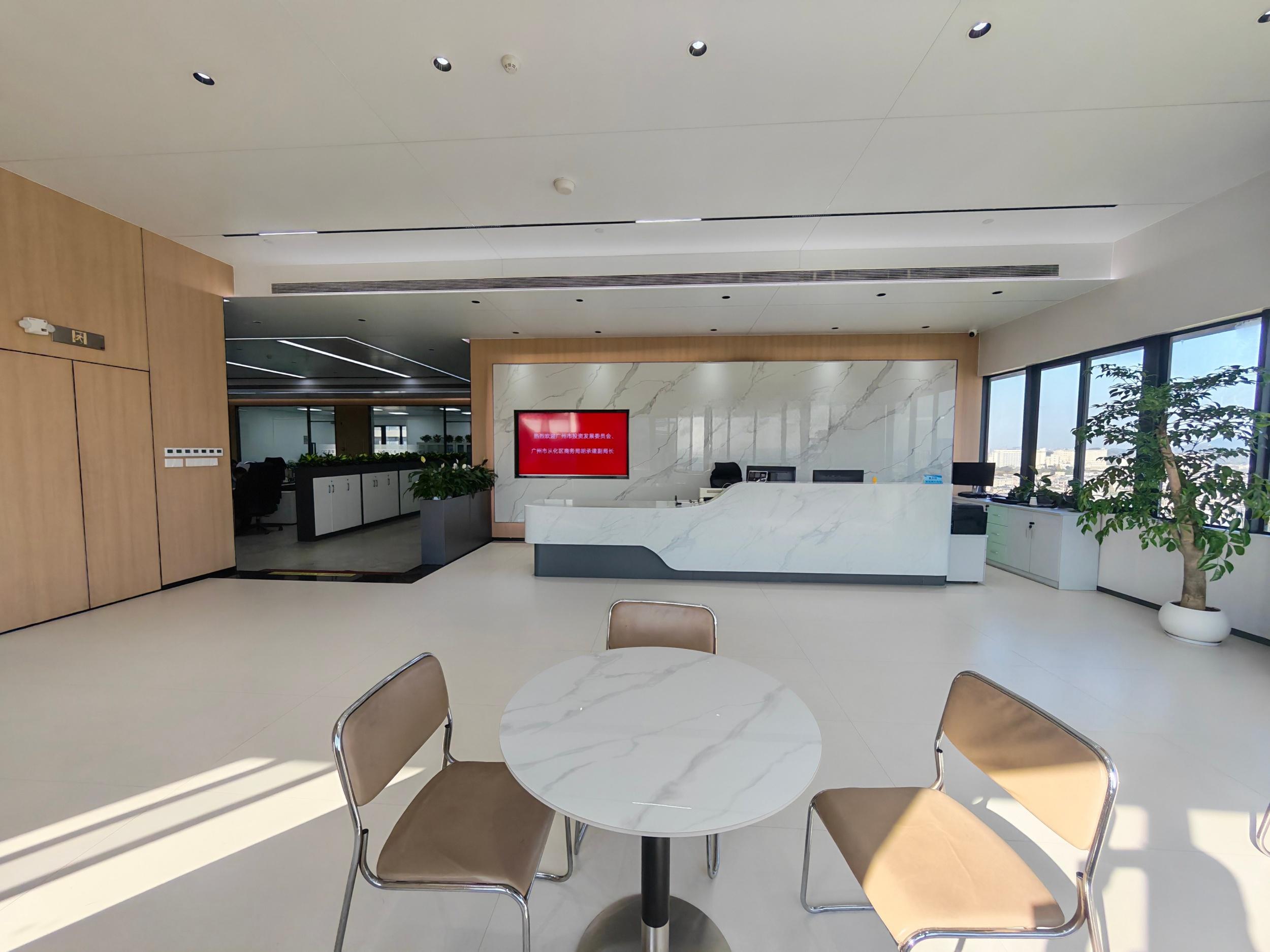
Factory: production base of over 30,000 square meters and approximately 400 staff, the capacity record behind a multi-year supply commitment.
Conclusion
A hybrid inverter partnership in EU solar+storage is a documentation project as much as a sourcing project. The model range, the warranty per line item, the service workflow, the acceptance criteria and the change-control rule are what a buyer actually owns after signing — and each of them can be stated precisely using the facts above: Hybrid Inverter 6KW, 10KW, 12KW and 15KW with 220V–230V / 50Hz EU output, 12V / 24V / 48V input options, aluminium alloy housings and IP21 to IP67 protection; LiFePO4 battery storage with 180V–270V output range, 0°C–55°C charging, 6,000 or 8,000 cycles at 90% DOD, 25°C and 0.5C–1C, and a 5-year warranty on the Wall Mounted & Floor Standing Battery Energy Storage models.
Buyers who write those five documents before the first container do not need to negotiate goodwill later. Buyers who skip them end up negotiating it in the middle of a failure, in a second language, with an installation already energised.
Next step: sample, specification set and warranty table
Request a hybrid inverter sample or quotation together with the matching EU specification documents and the warranty table for the model under evaluation. Guangdong Yeyanghong Energy Technology Co., Ltd. — admin@yeyanghong.com · +86-18042878526 · No. 3, 2nd Floor, Building A, Changhua Road, Haiwei Community, Ronggui Street, Shunde District, Foshan City, Guangdong Province, China · www.yeyanghong.com
Download the product brochure with the full model and specification list: Yeyanghong Energy Product Brochure (PDF)
Have Questions or Need More Details?
Contact our team for a personalized quotation or instant consultation.
Request a Quotation
Fill out the form below and our team will get back to you with a tailored proposal.
WhatsApp Direct Chat
Prefer to chat in real-time? Message us on WhatsApp for instant assistance & quick answers.
- Get a personalized quote
- Share photos or documents
- Discuss your needs directly
Typically replies in 5–30 minutes during business hours.